
Stones into Stories · 01
Stones into Stories · Prologue
拾古与故事 · 序
Another autumn. For those of us still at school, it is a kind of new year. I want to write something. Yet the pen that had always turned inward came slowly to rest in that Beijing autumn, and has stayed there.
Why did it stop? Perhaps my feet had carried me farther out into the world without my noticing. Or perhaps I had lingered too long at the threshold between inward and outward, caught in a long bewilderment over what it means to read and write, to advance and withdraw.
So, through the days and nights of passing seasons, when my feet could scarcely be still, I simply laid down the pen and listened, with my whole body, to all the stories.
I like listening to stories. So do many of the friends I have met.
Perhaps this fascination is why a narrative thread seems to run through my life. I hold on to it and feel my way forward. Or rather, it takes hold of me and leads me stumbling on.
Until I grow tired, almost asleep. At the very instant I am about to lie down beside the story, a prickling sense of nothingness wakes me.
It is like a motorway at night: the warmth inside the car, the steady hum of tyres. One by one, the broken reflective lines are swallowed by the eye, pass through the mind, slip out through the drowsiness gathering at the back of the head, and vanish, unnoticed, into the dark.
Then, suddenly—
A twitch of the wheel, perhaps. Or my head drops, and my heart clenches as though my foot has missed a step. A chill runs down my back. The fright comes after: Was I asleep just then?
I often come across that sentence from Joan Didion’s The White Album: “We tell ourselves stories in order to live.” Less often quoted is her account of how we live by “the imposition of a narrative line upon disparate images.”
But if stories are to living only what reflective lane markings are to a car at night, then a life already weary can only start awake from drowsiness, before slowly drifting off again.
Fine words and plots, concealment or faithful record: in my own poor attempts, they are mostly like a line in its strictest definition. No area, no endpoints. Only a line, stretching towards an abyss that neither writer nor reader knows they can ever reach.
In that storyless void, I have gradually come towards a place for writing to rest: do not write story after story to fill the emptiness. Walk through stories. Then let the writing follow.
Even if all I do is weave, with a cool and unsparing hand, the threads I have drawn through my fingers into a cloth, I can lay that cloth over Time and Space, which were here before me and will remain for ever. When they turn to look back, perhaps they will no longer frighten my small self into reeling and sinking to the ground.
“What has substance, yet no fixed place, is space; what has duration, yet neither beginning nor end, is time.” — Zhuangzi, “Gengsang Chu”
Zhuangzi and those like him need no such cloth. They need only ask. The answer that never comes is the very answer they seek.
But whenever I stand before those markers of time and space, before I have dared, like Zhuangzi, to question the heavens, Time and Space have begun to question me:
You stand here. Each time your gaze passes over these ancient places, what, exactly, is your heart taking in and giving out?
Of course I cannot answer at once. They are a mustard seed and Mount Sumeru; dust and fragments; a whole sky of stars.
After turning it over in my mind, and walking this way and that, I think I ought, first, to fit them together and see.
The piecing-together may be partial, may reduce things to symbols, may force a rhyme where none belongs. If, at the end, I can gather up enough to make that patched and mended cloth, and cover those great questions with it, I will have won.
This is the cloth I spent years making, then tore apart, and am now trying to piece together again: a theme of seeking out the past—of visiting, one by one, the places it has left behind.
This theme has been floating in that void for far too long.
We are thrown into this world. Some are falling; some beat their wings. Others, amid all that has no story, take pleasure in floating, in being suspended:
No shore, no anchor, no Other, no summons that must be answered.
There is our imperfect being; the small things that ask for a moment’s attention before they yield their beauty; and the nearby, growing wider all the time.
We do not command the bountiful sea. We choose the waves that come to meet us.
As we float, we invent games of floating. In an unending suspension, we offer up one moment, then another.
“I stay and go: I am a pause.” — Octavio Paz, “Between Going and Staying”
This time, perhaps, I will pause a little longer. Yet to the long river I am only another inconspicuous rock standing in the current. And we have always loved stones:
10,000 years ago, a sun was carved into stone;
(The rock art of the Helan Mountains)
5,000 years ago, stone gave shape to a goddess’s head;
(The goddess figure at Niuheliang)
3,000 years ago, stone bore writing;
(Oracle bone no. 2172, Xiaotun South)
2,500 years ago, stone held murals within;
(Murals excavated from Palace no. 3 at the Qin palace site in Xianyang)
2,000 years ago, stone rose into gate-towers and shrines;
(Han funerary shrines and que towers in the Yellow–Luo River region, Shandong, and Sichuan)
1,500 years ago, stone could open into history’s smile;
(The cave temples of Xiangtangshan and Yungang; Northern Dynasties Buddhist sculpture in the Yecheng and Qingzhou traditions)
1,250 years ago, stone became the pagodas of two masters of the Buddhist canon;
(The relic pagodas of Kumārajīva and Xuanzang)
1,000 years ago, stone was inscribed with “Snow Waves” and “Qiuchi”;
(Su Dongpo’s travels in official service)
700 years ago, stone carried an imperial edict across the land, abolishing redundant rites;
(Ming edict stelae revising the titles of sacred mountains, seas, and rivers)
500 years ago, stone was piled into mountain-islands in a corner of a garden;
(The islands in the water at the Humble Administrator’s Garden)
250 years ago, stone weighed upon the night of the last dynasty;
(The Western and Eastern Qing Tombs, and the three imperial tombs of Shengjing)
100 years ago, stones were thrown back at those who had thrown them;
Today, we make stone into chips—and on them, I write.
Haizi wrote: “Give stone back to stone.” (Diary)
Haizi picked up the stone of his own consuming attachment, then set it down again. Those who gather the past pick up the stones that time has already loosened its hold on and laid aside. They wipe them gently with their own small cloth, then give them back to time.
As I did one evening three years ago. The setting sun smoked into a faint, cold haze. I looked up at my favourite stone, my gaze brushing over it again and again: the hipped roof, the single bracket blocks and bearing timbers, the flame-shaped niche, the seated Buddha; the strokes of clerical script growing into the bones of regular script; the Revolt of the Six Garrisons; nameless villagers and men of courage. In the end, I gave that stone pillar, standing for fifteen hundred years, back to the cold of the Yi River.
Not an inch of time can stay the sundial’s shadow; not a foot of water turns in vain.
The mist over Yi County had not quite lifted that day, but the darkness was already gathering.
Without noticing, I had forgotten to fear the answer that would never come. I was already walking towards the next story, still weaving the cloth that would cover eternity.
Let us go, then—while the gaze that brushed the stone is still warm.
— Zhuoyang Jiang, in my hometown
National Day holiday, 2026
PHOTOGRAPHIC NOTES
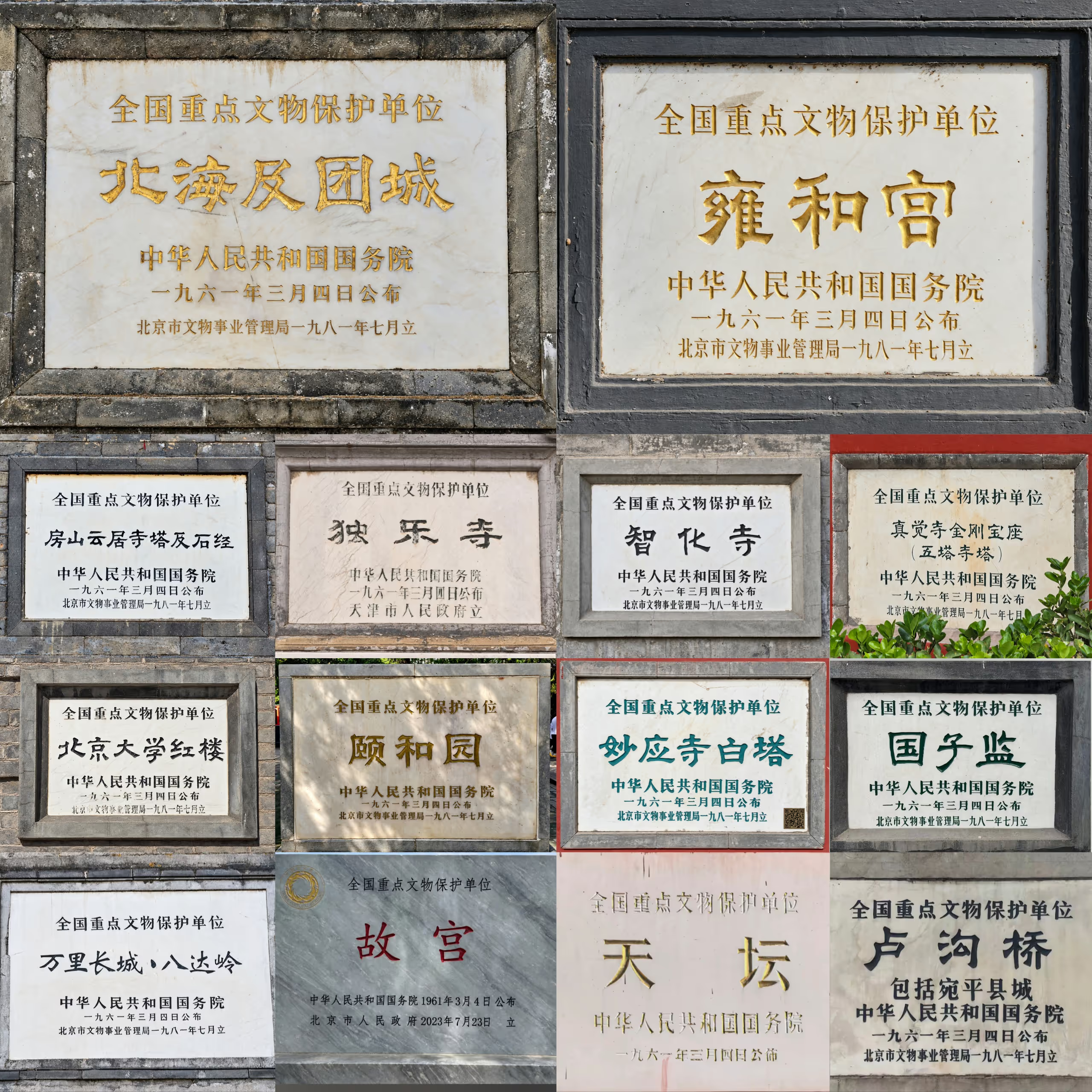
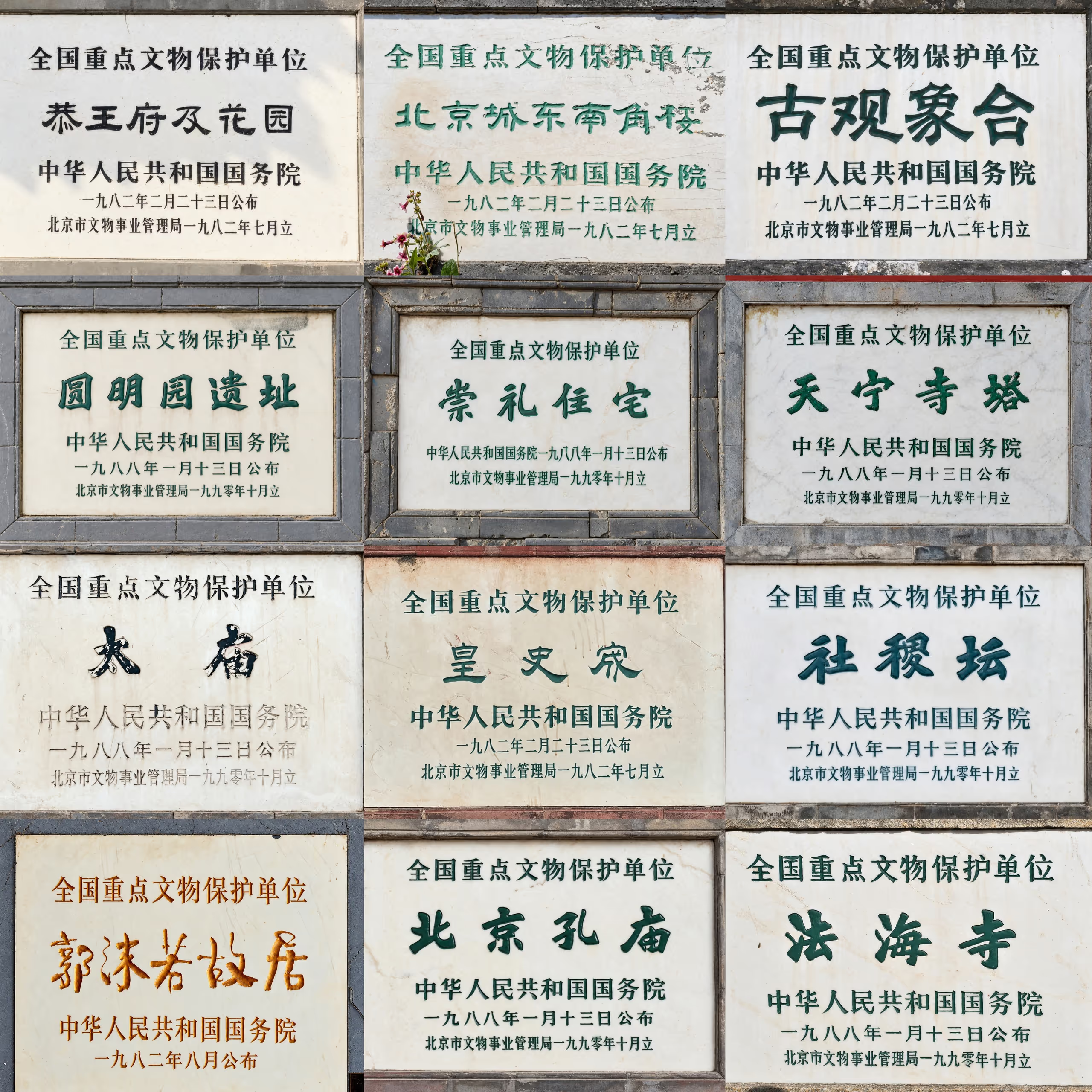
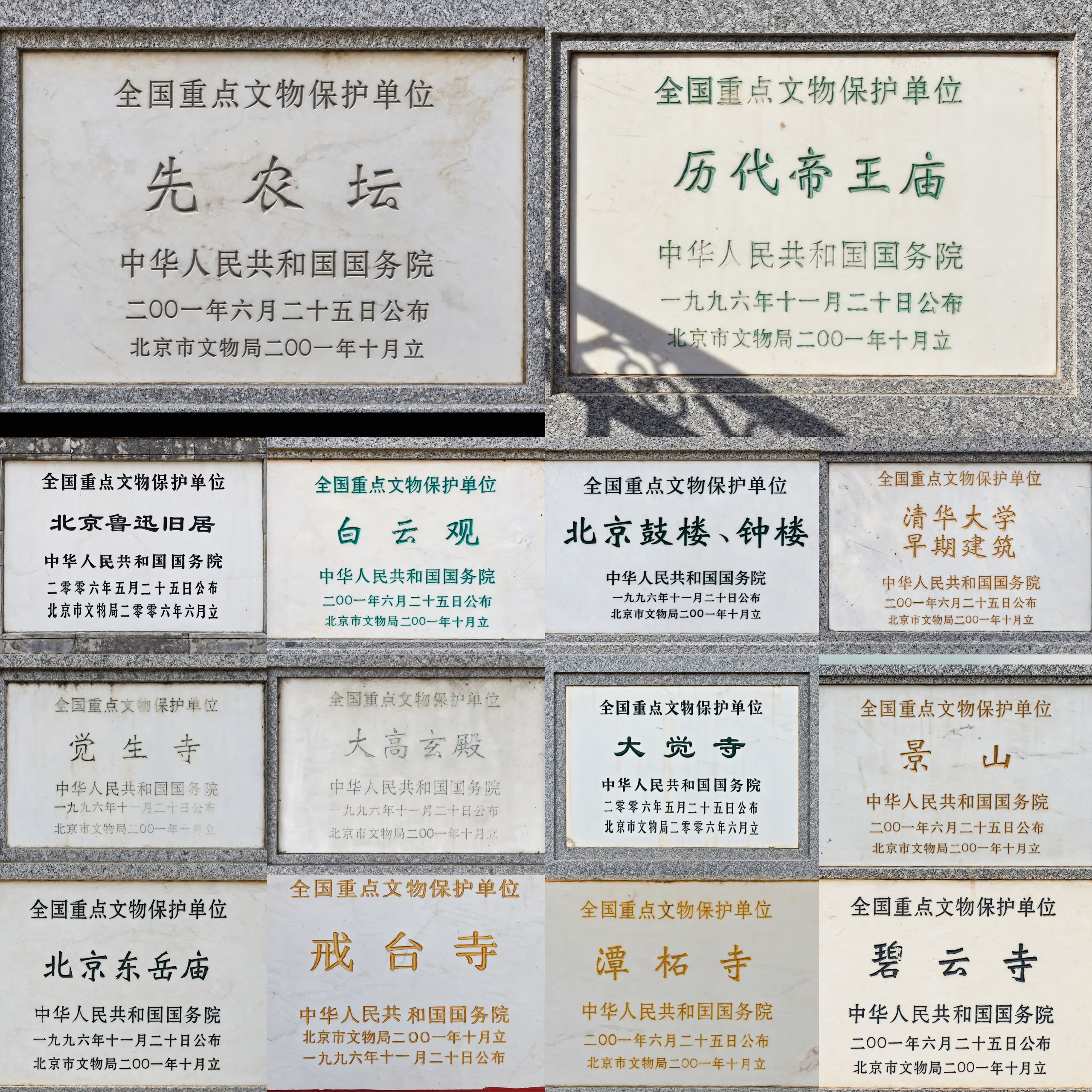
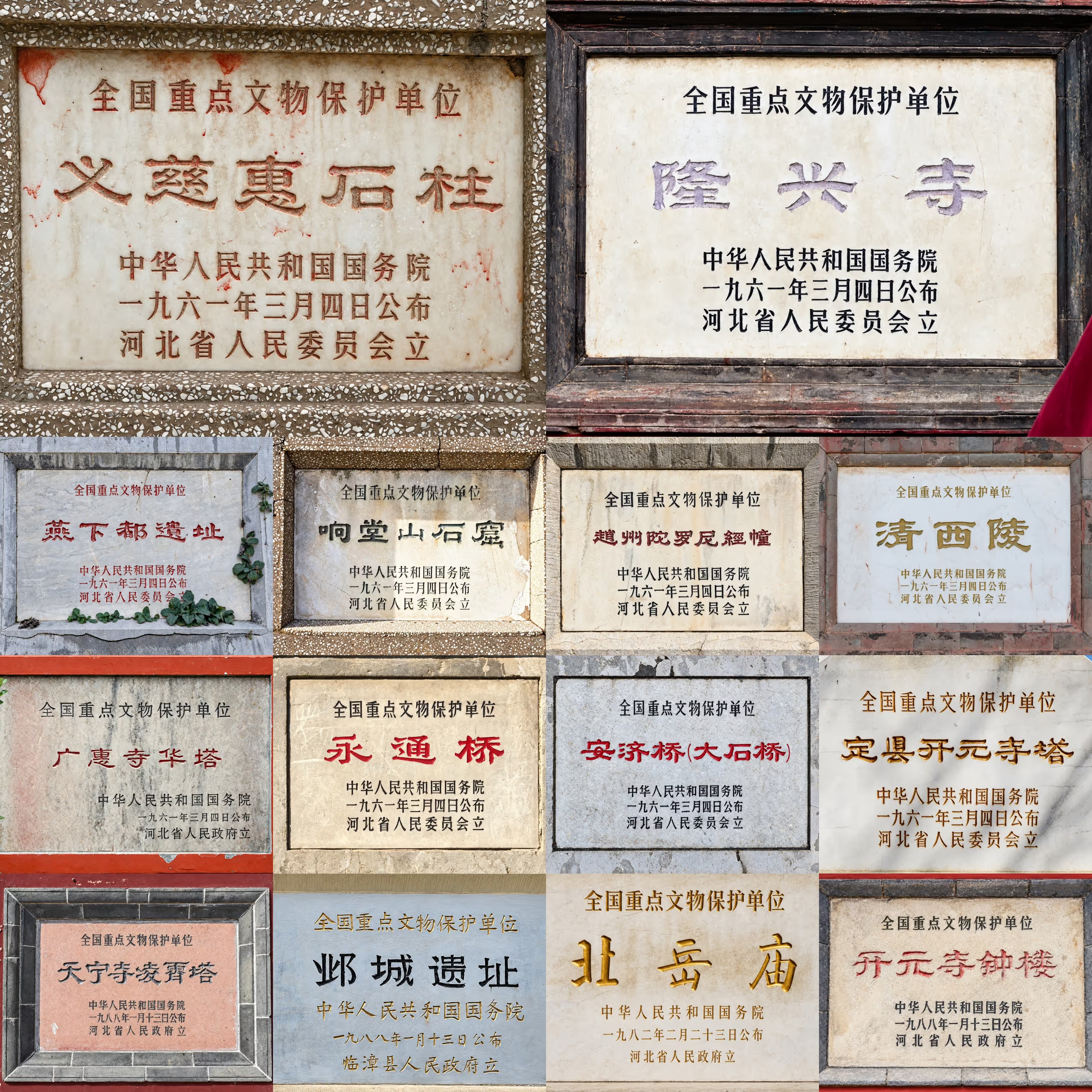
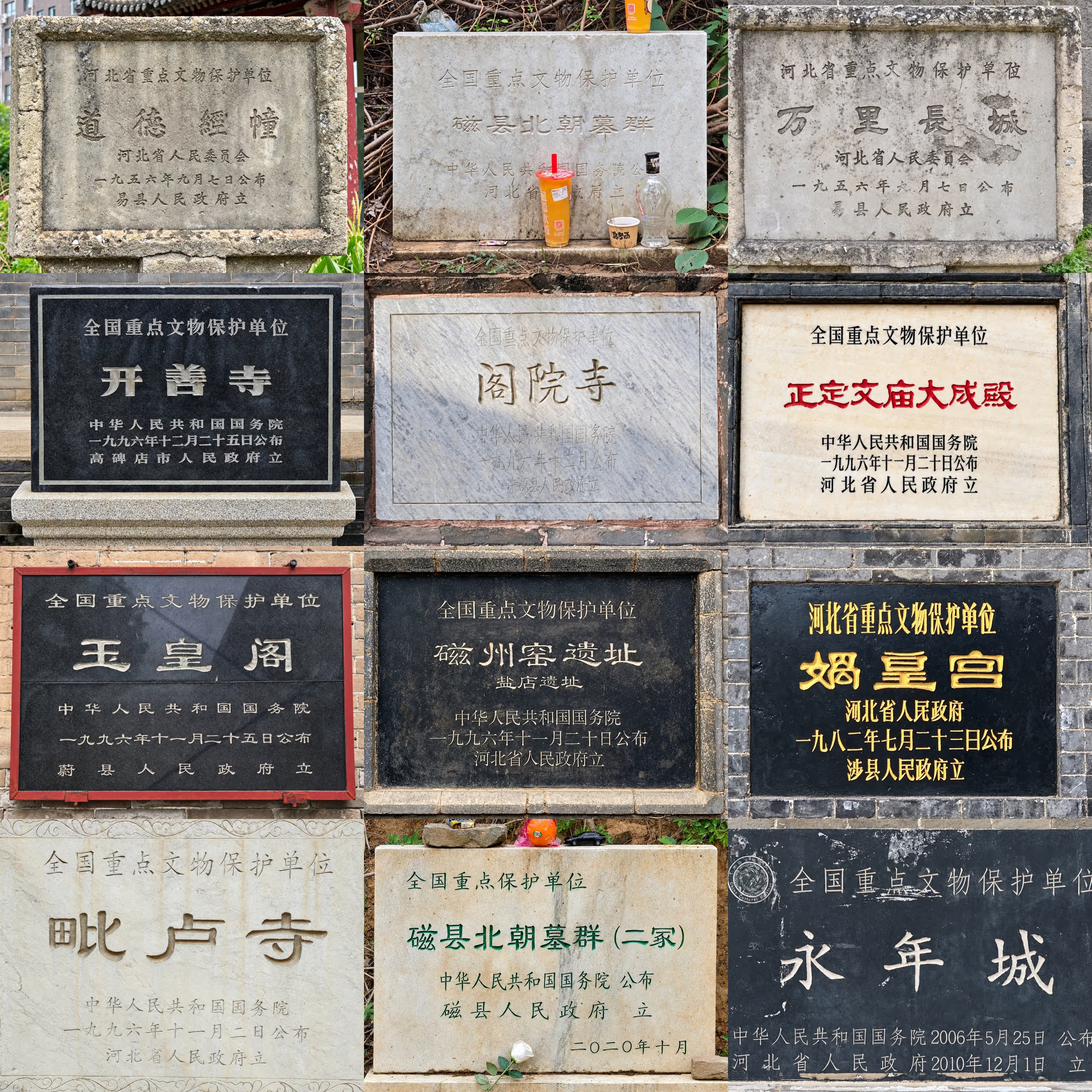
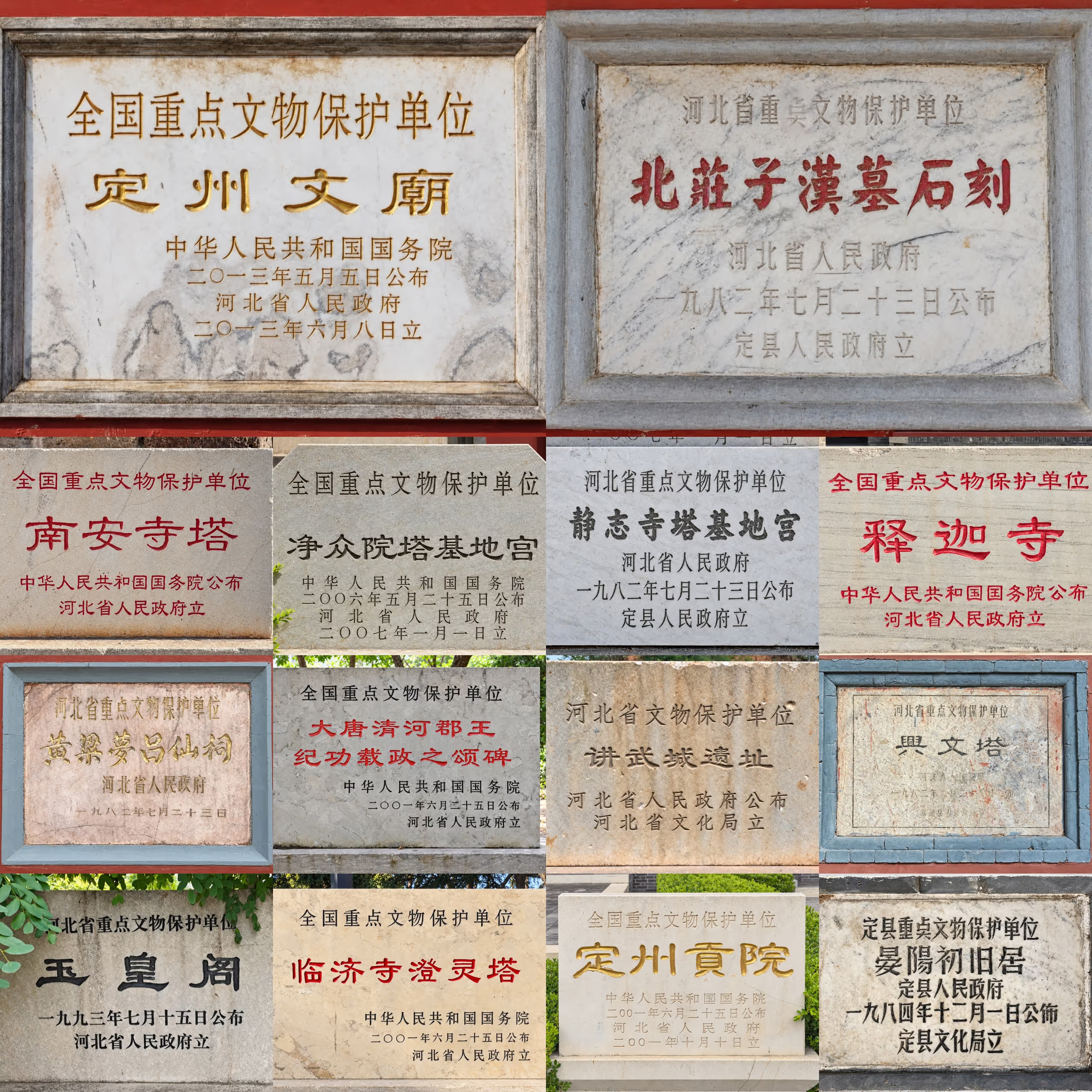
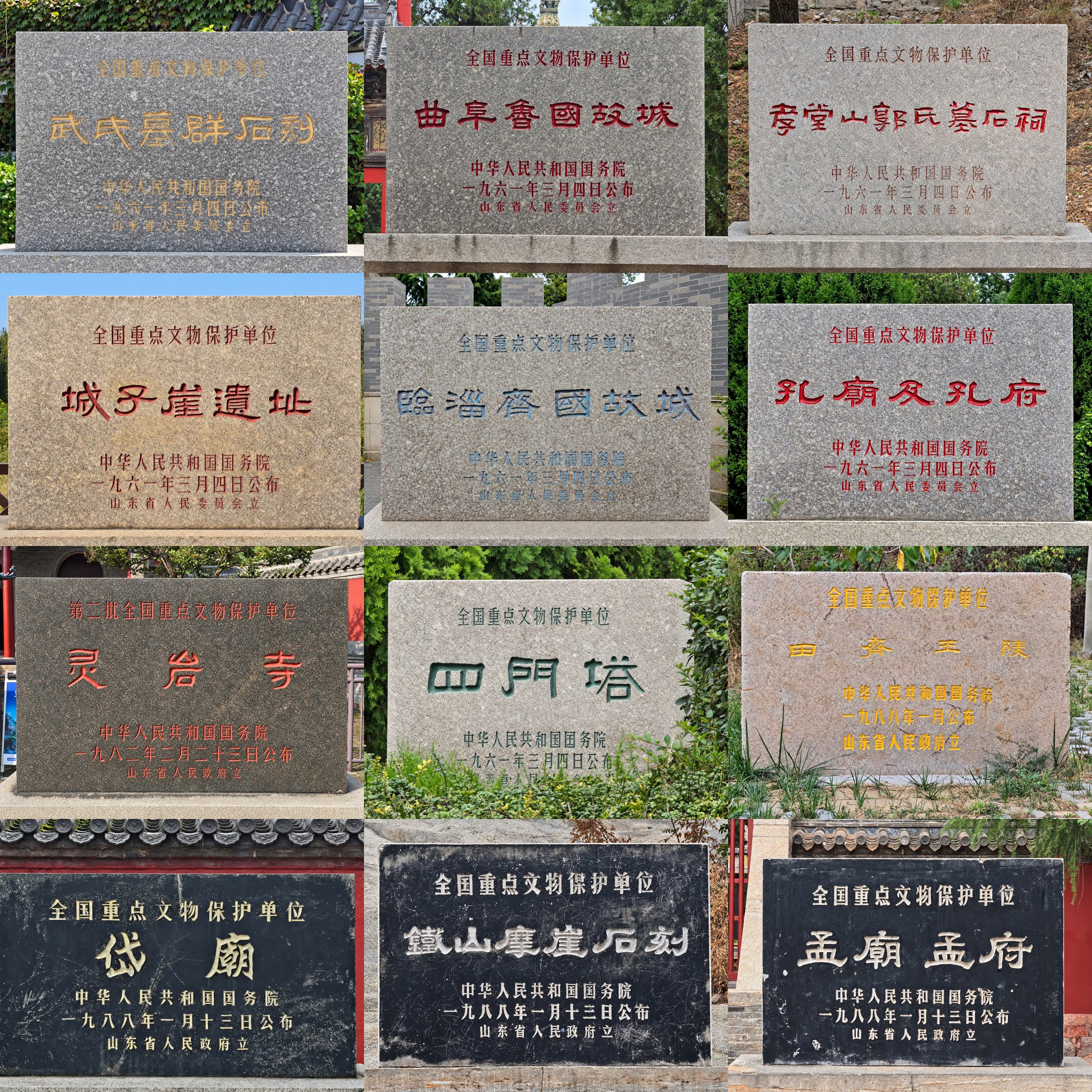
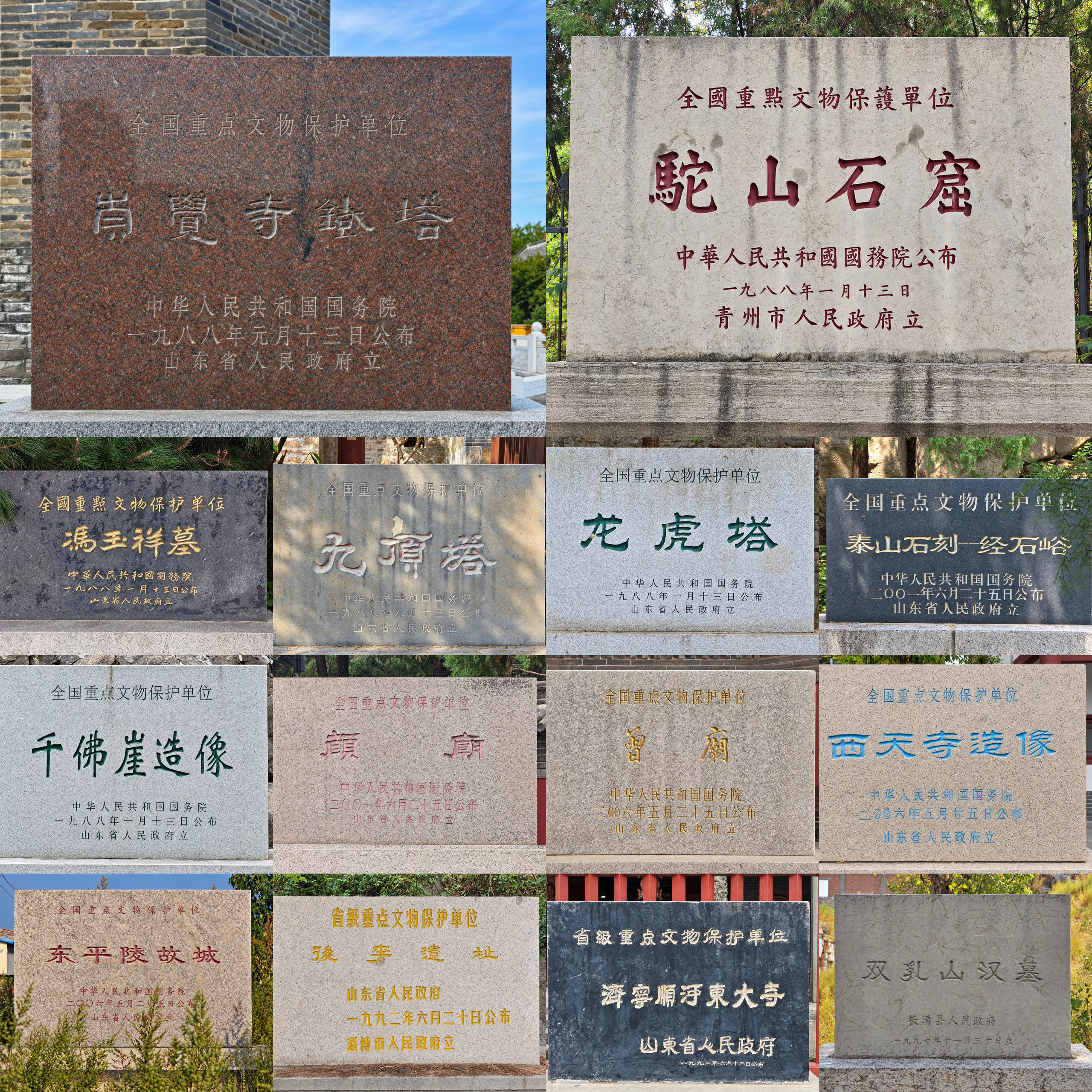
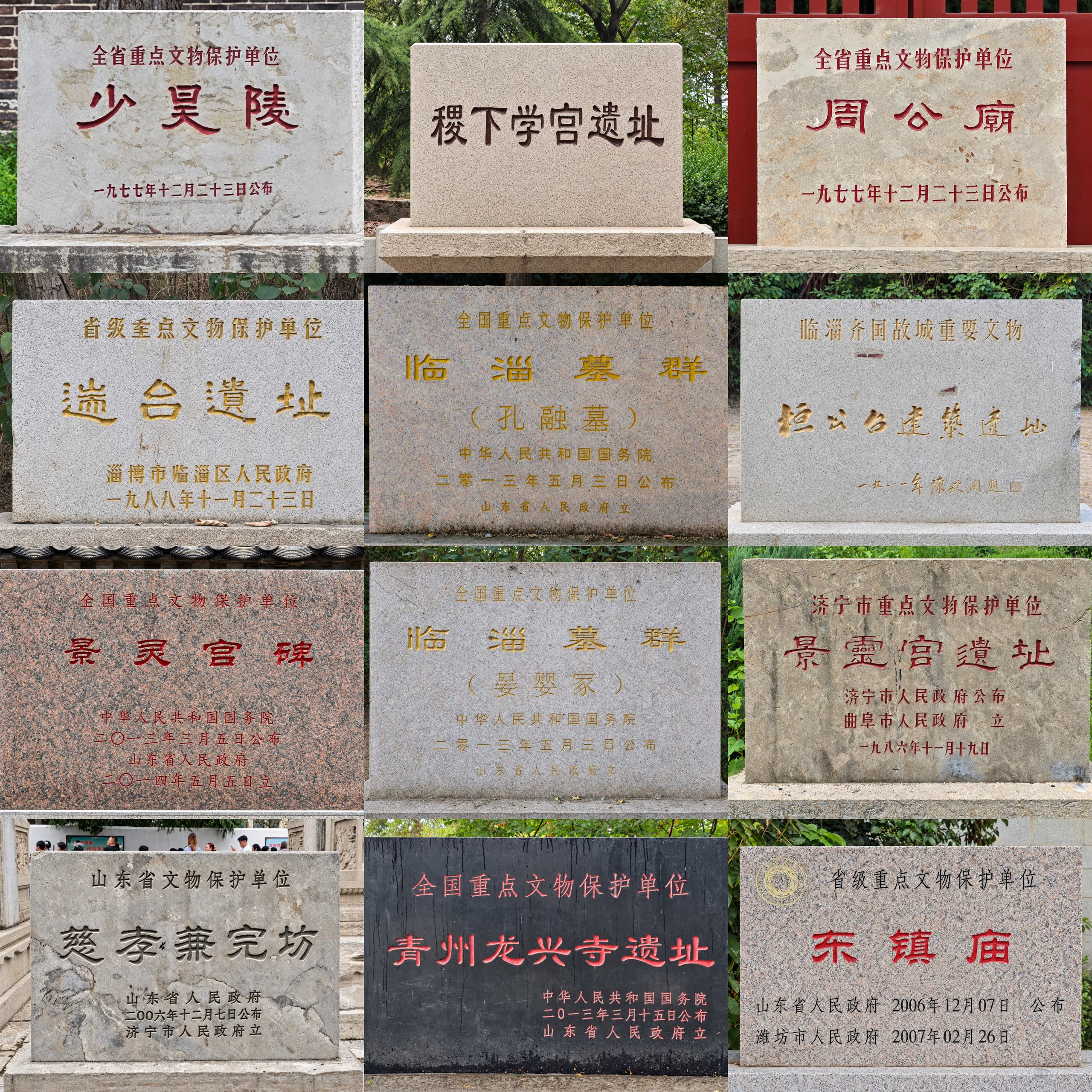
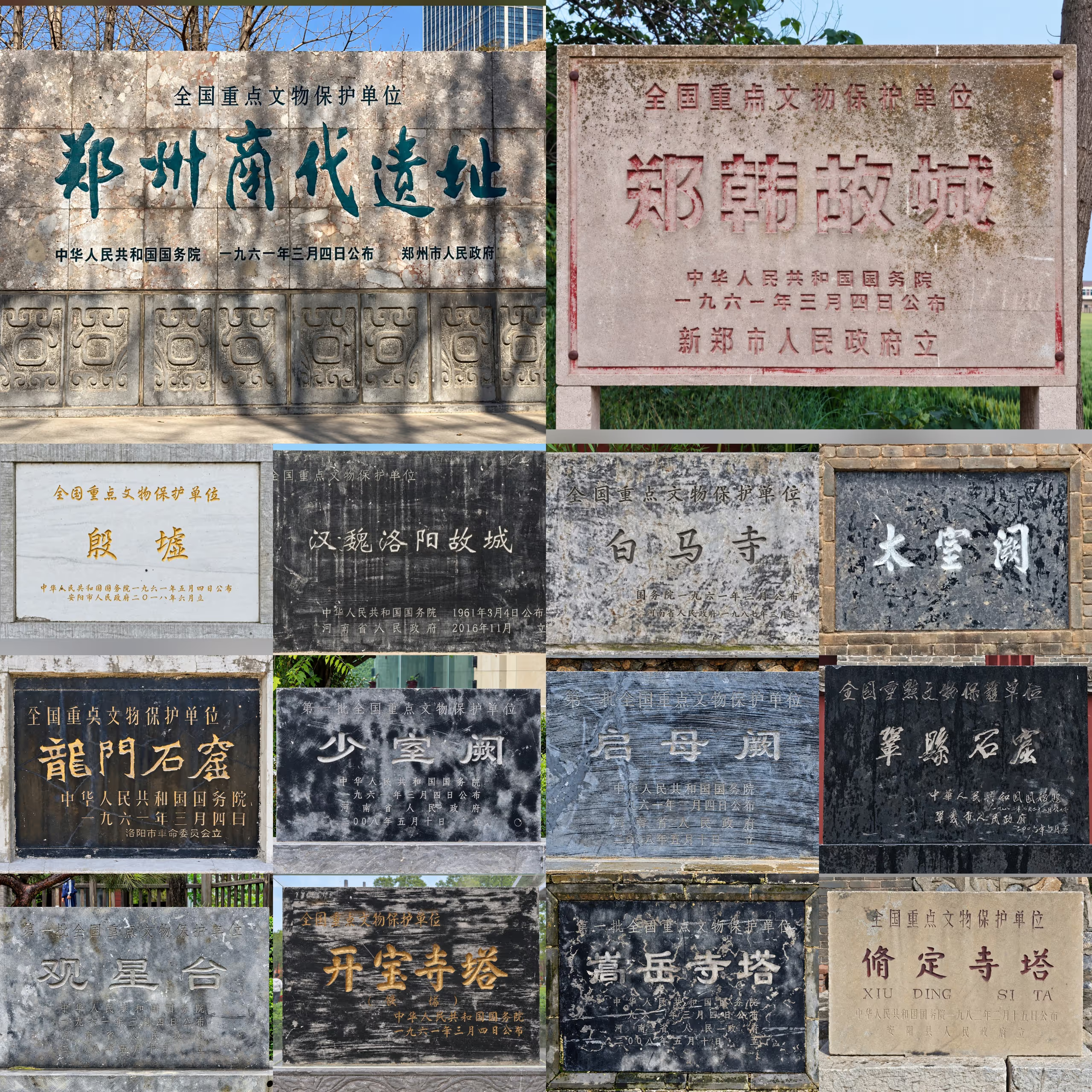
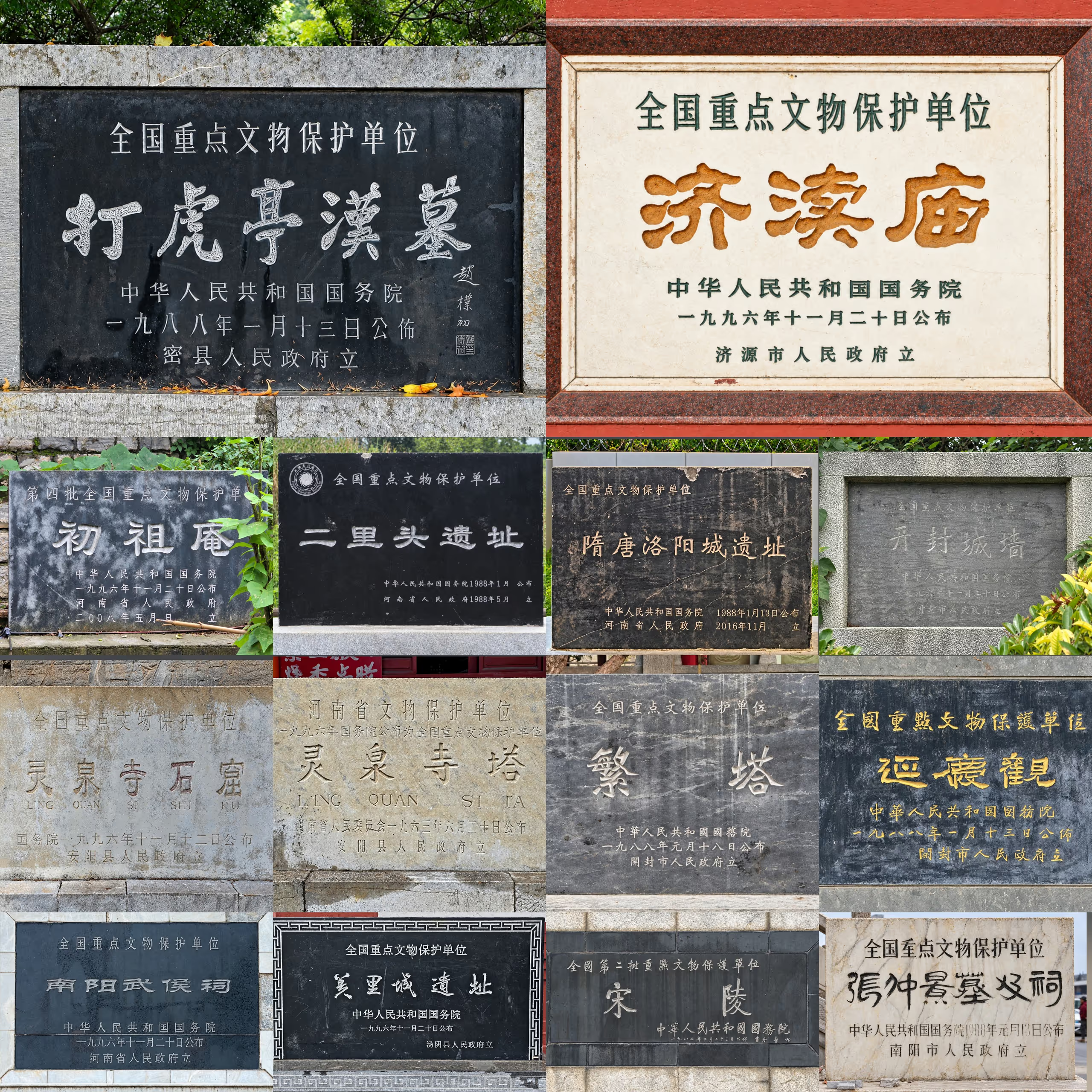
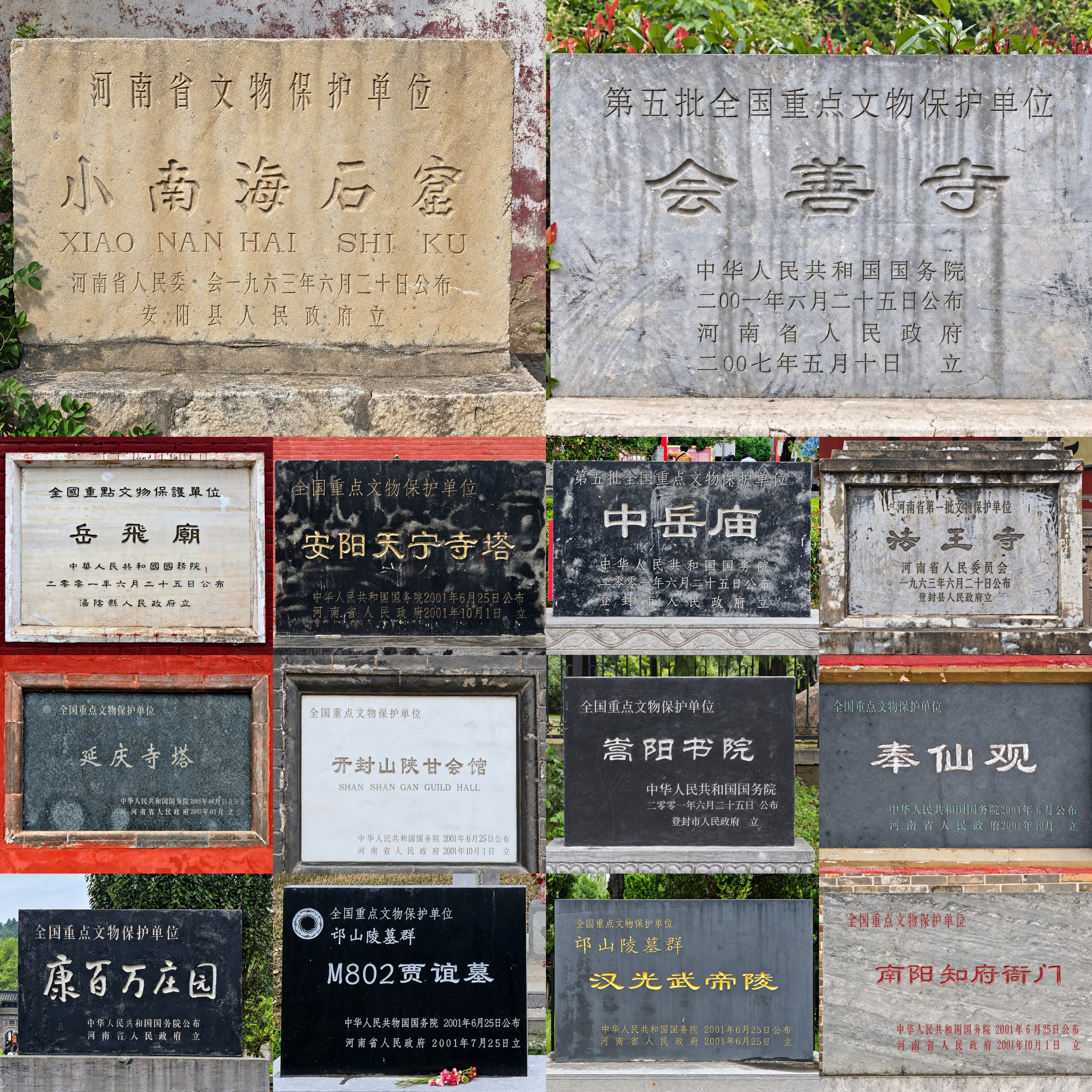
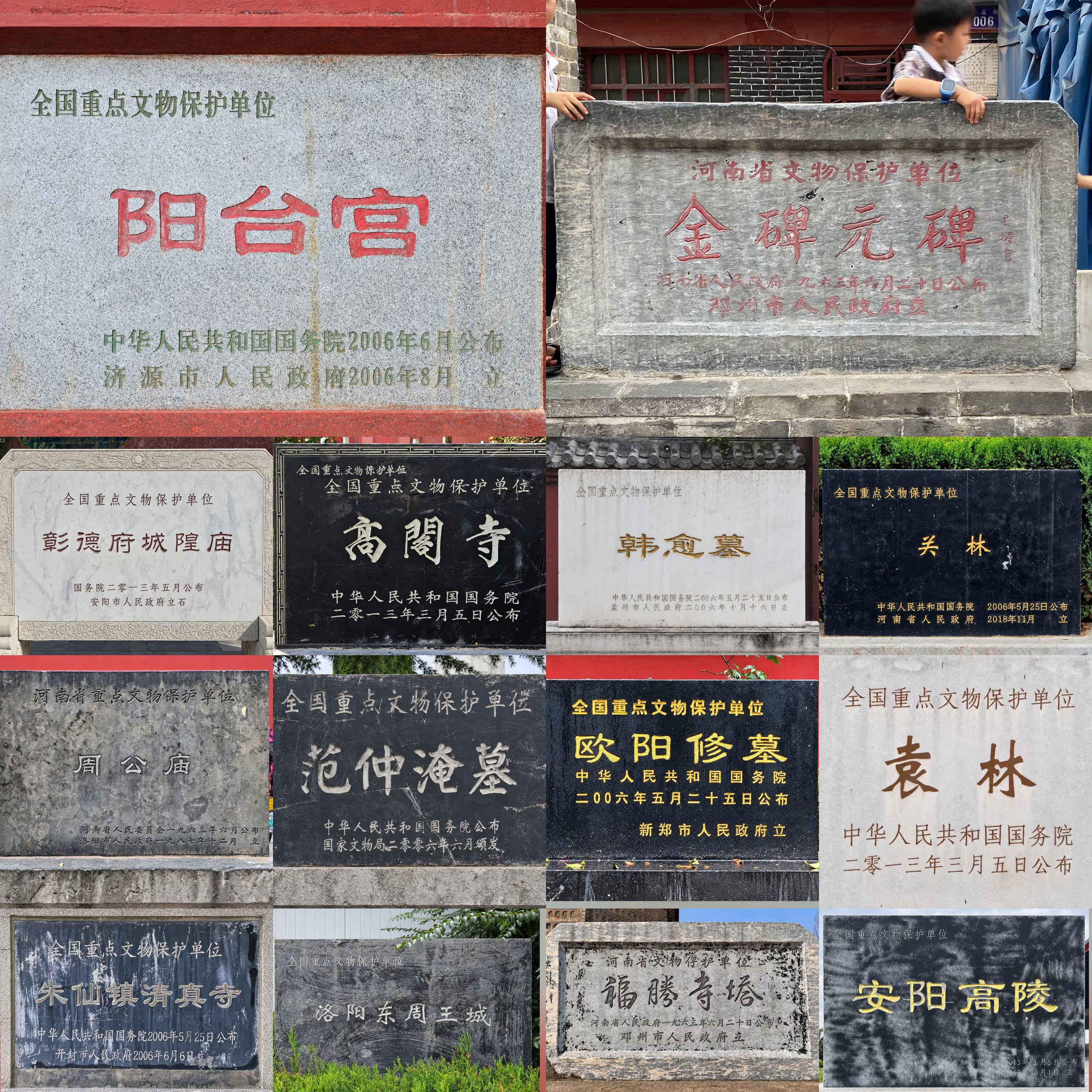
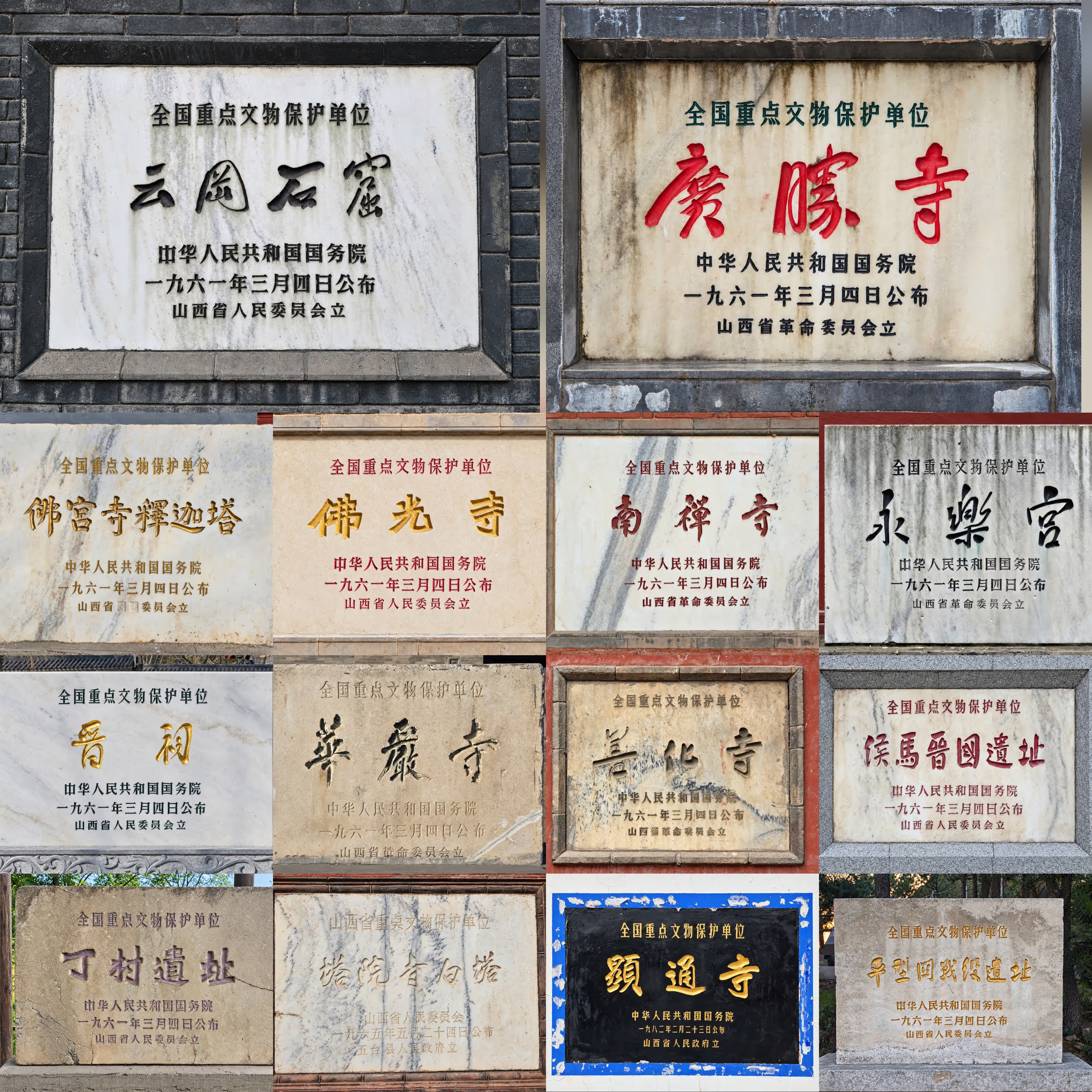
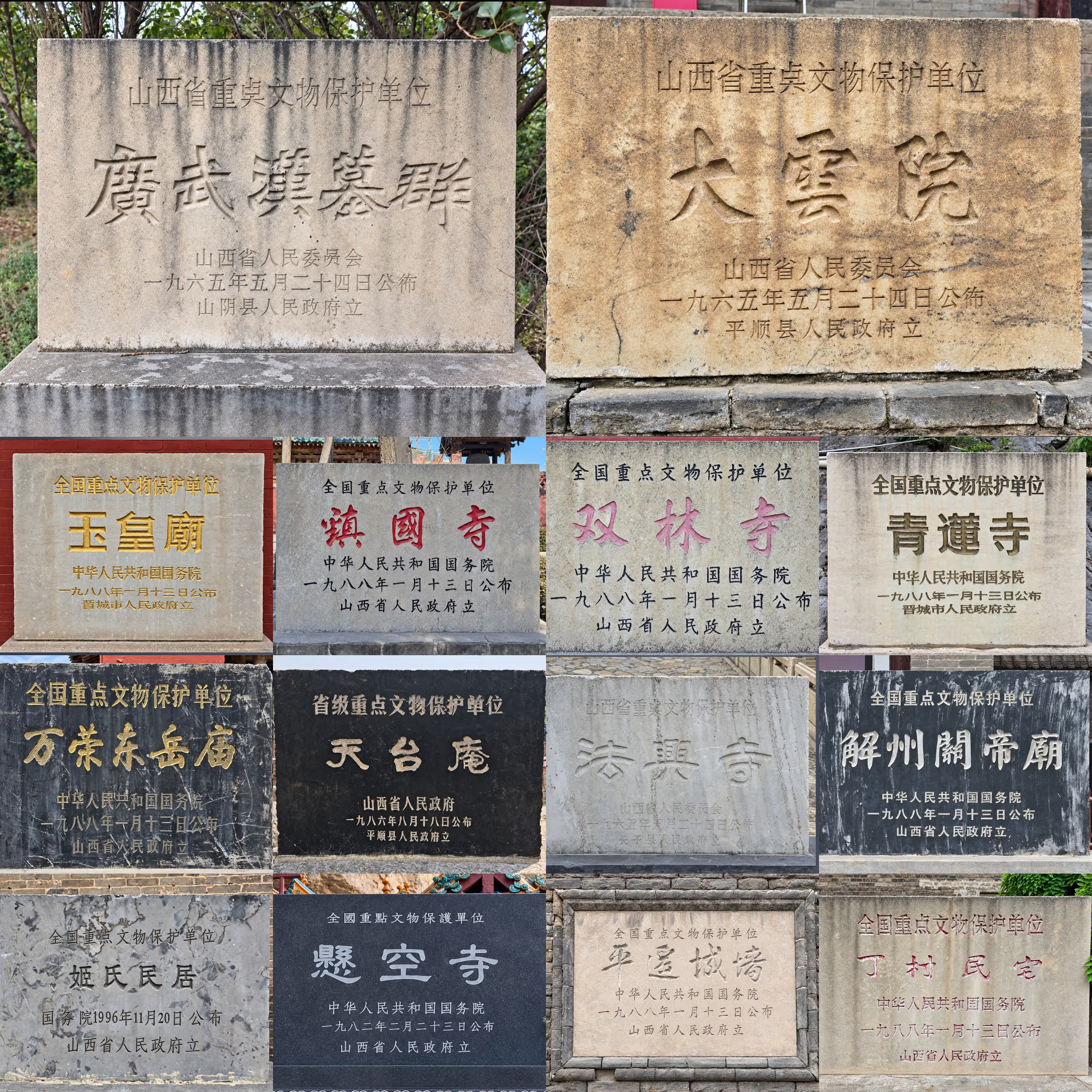
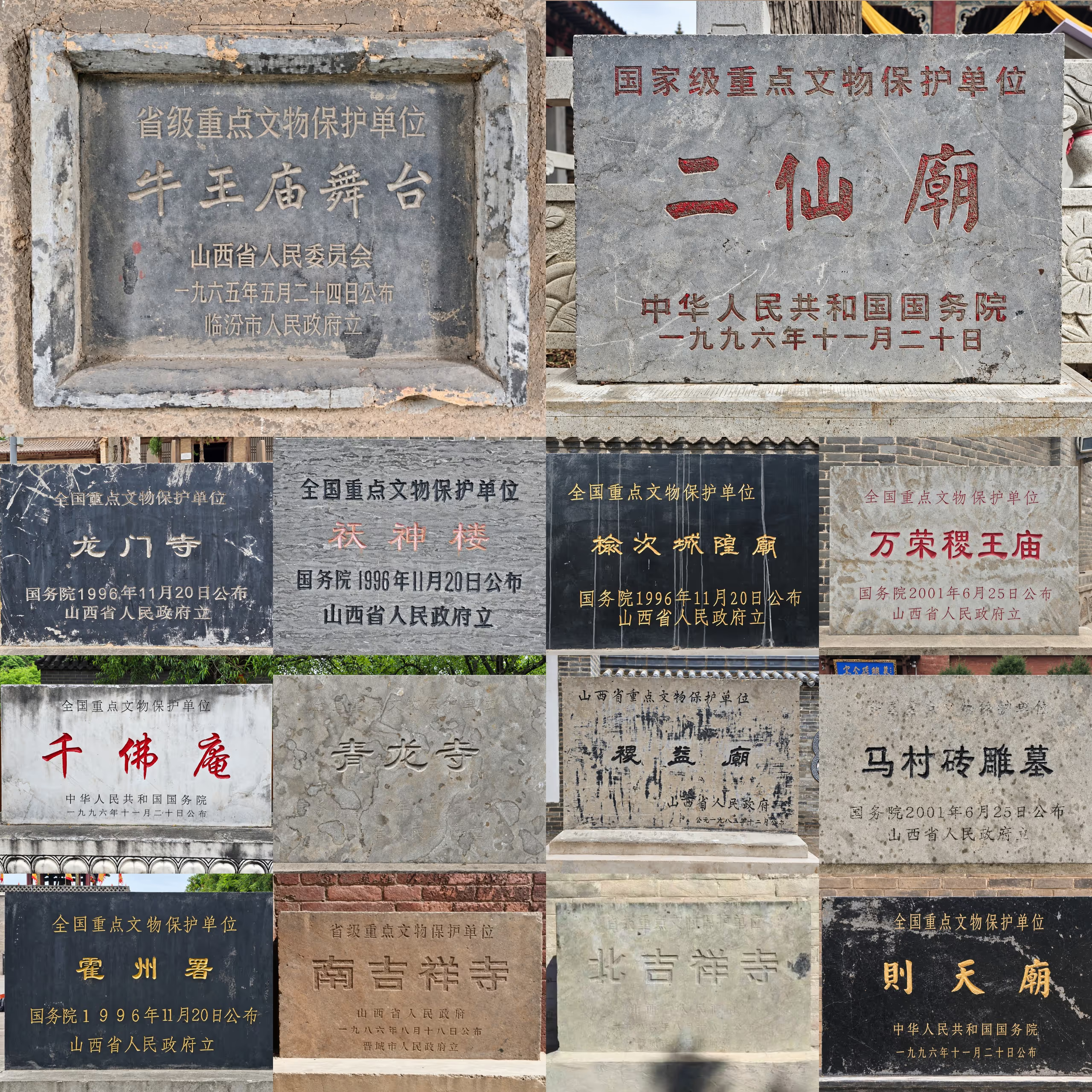
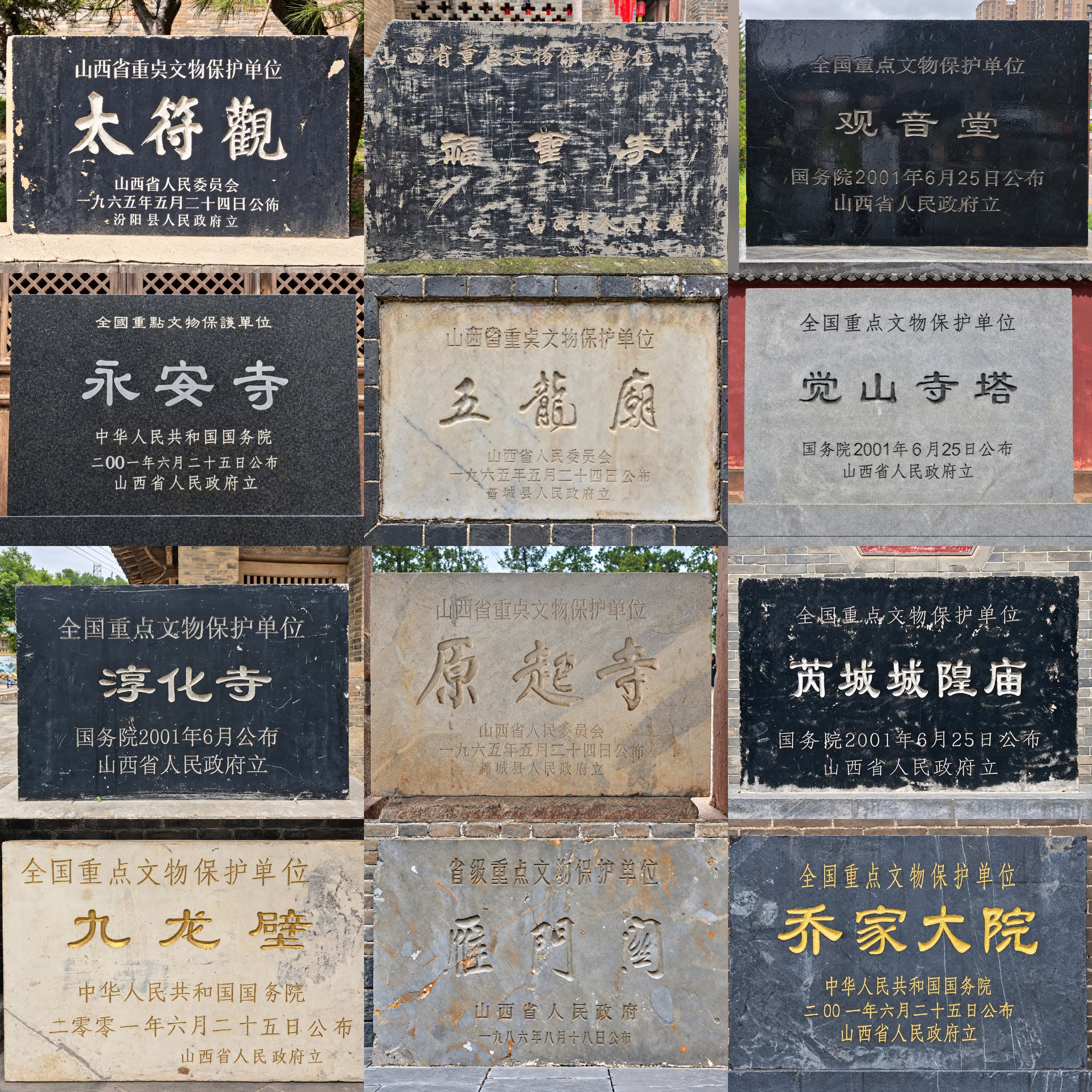
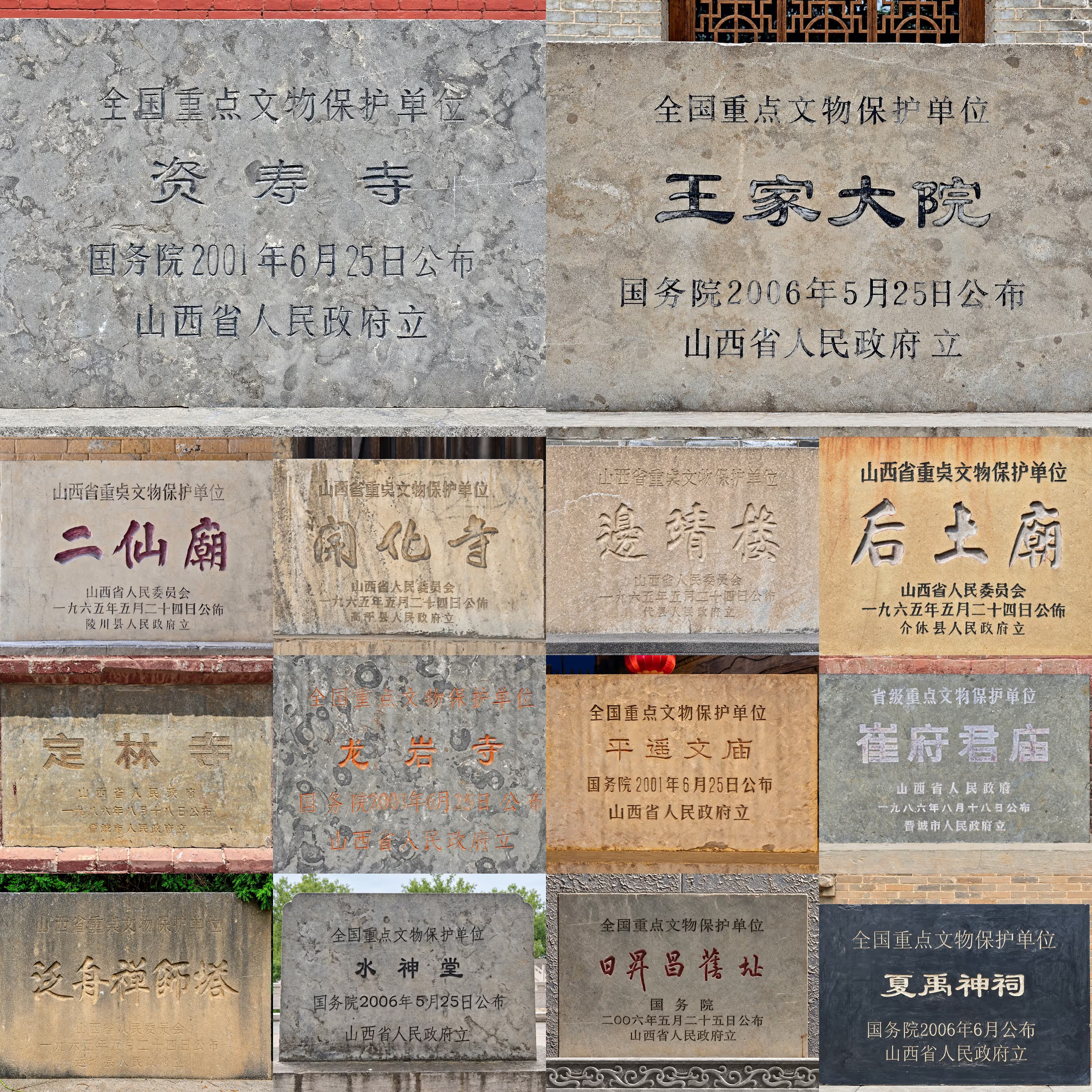
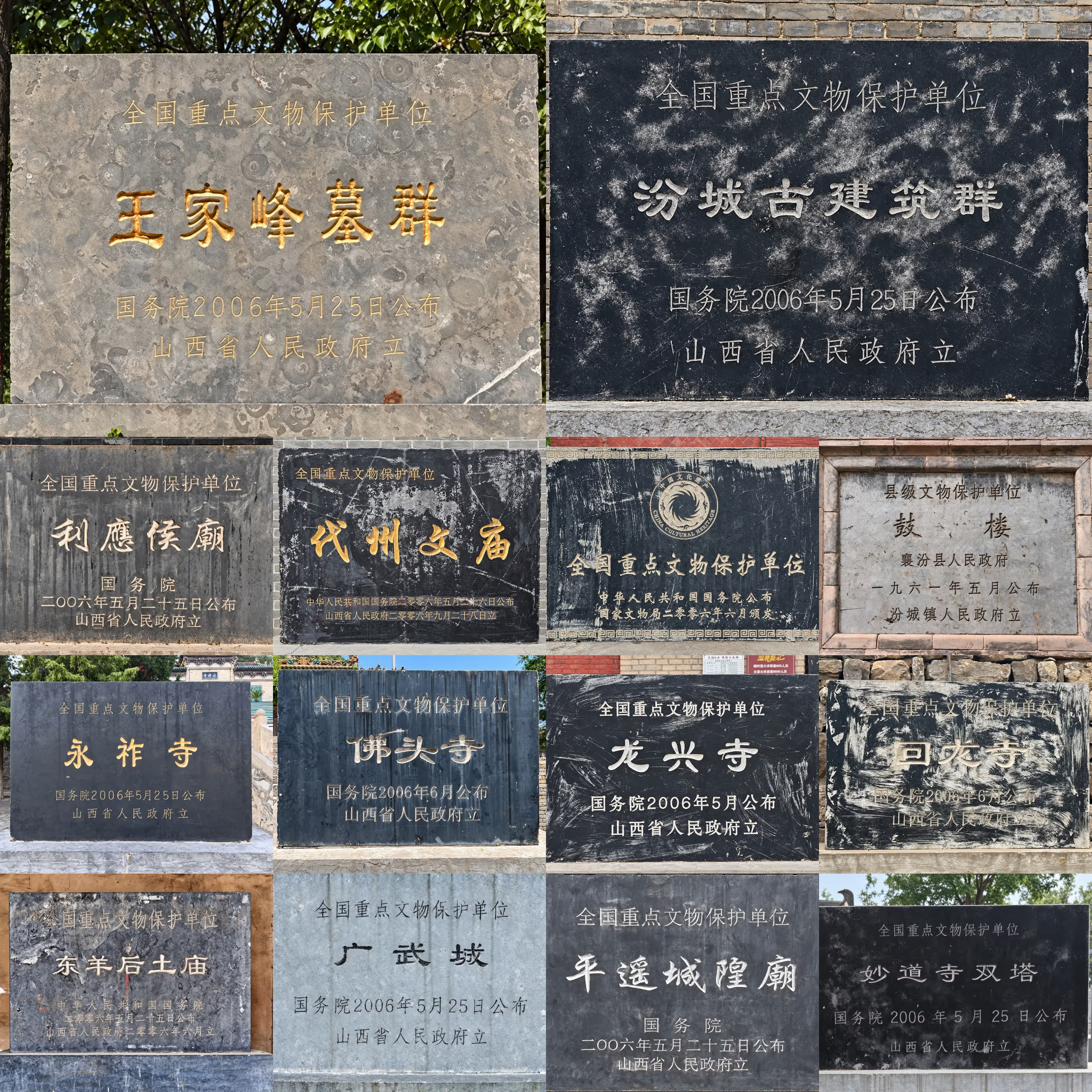
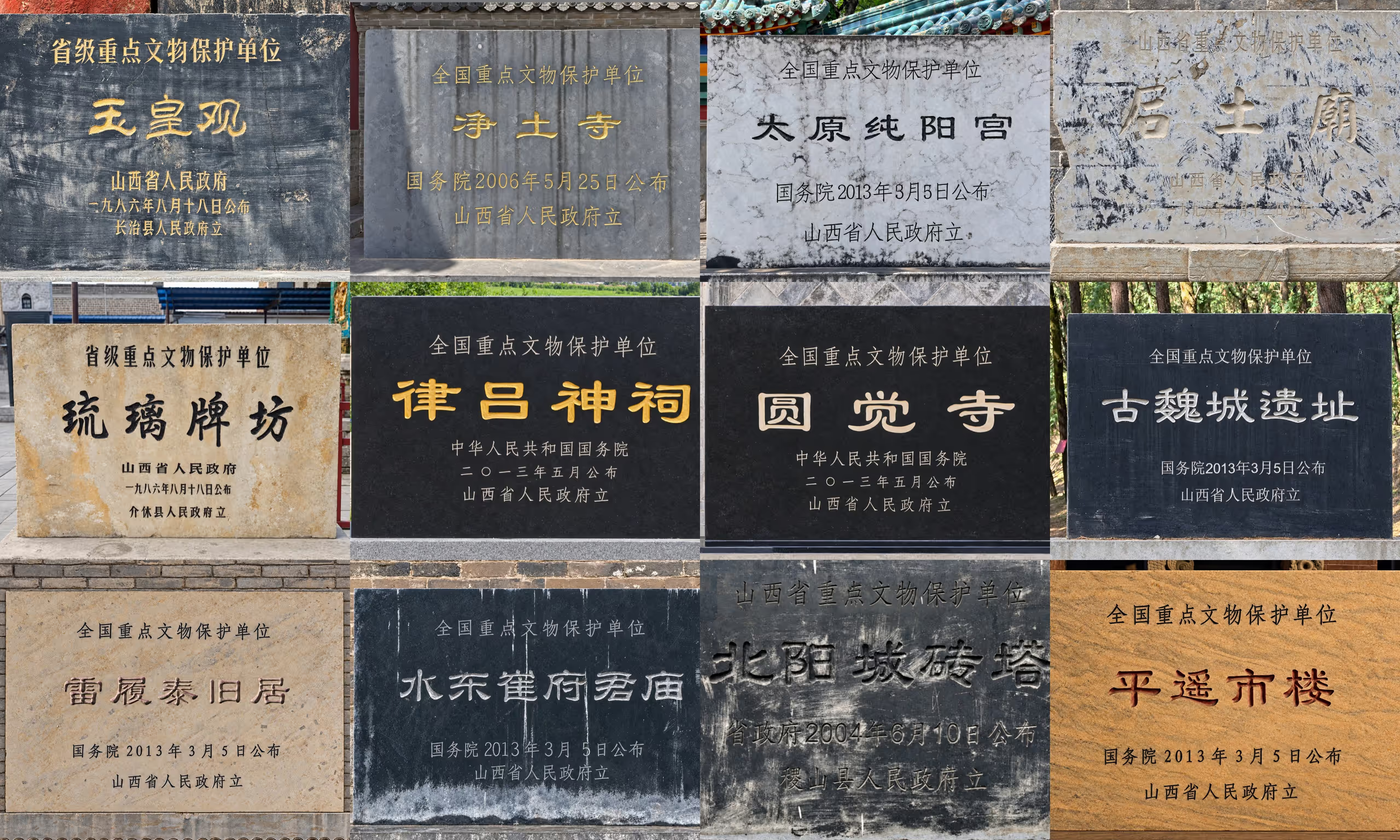
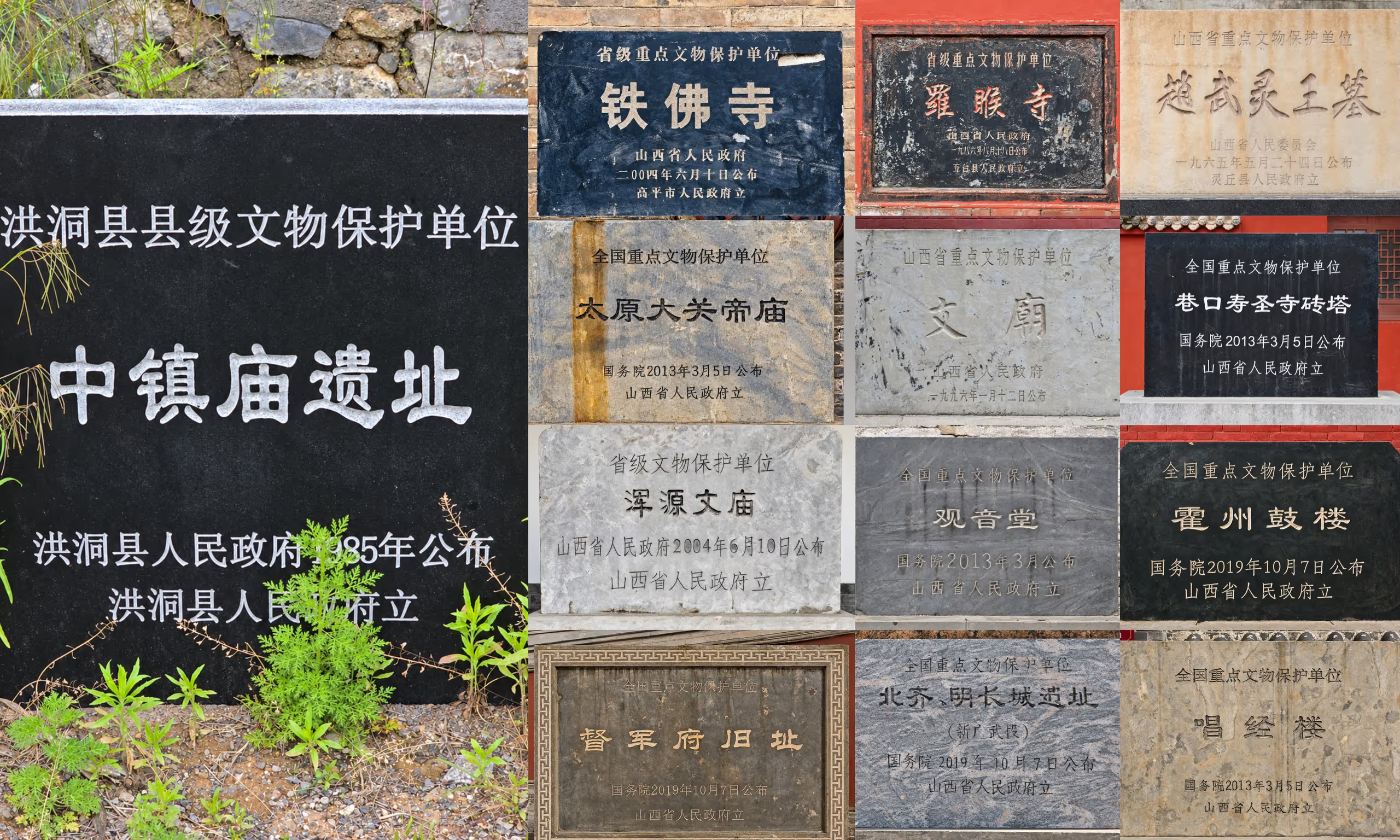
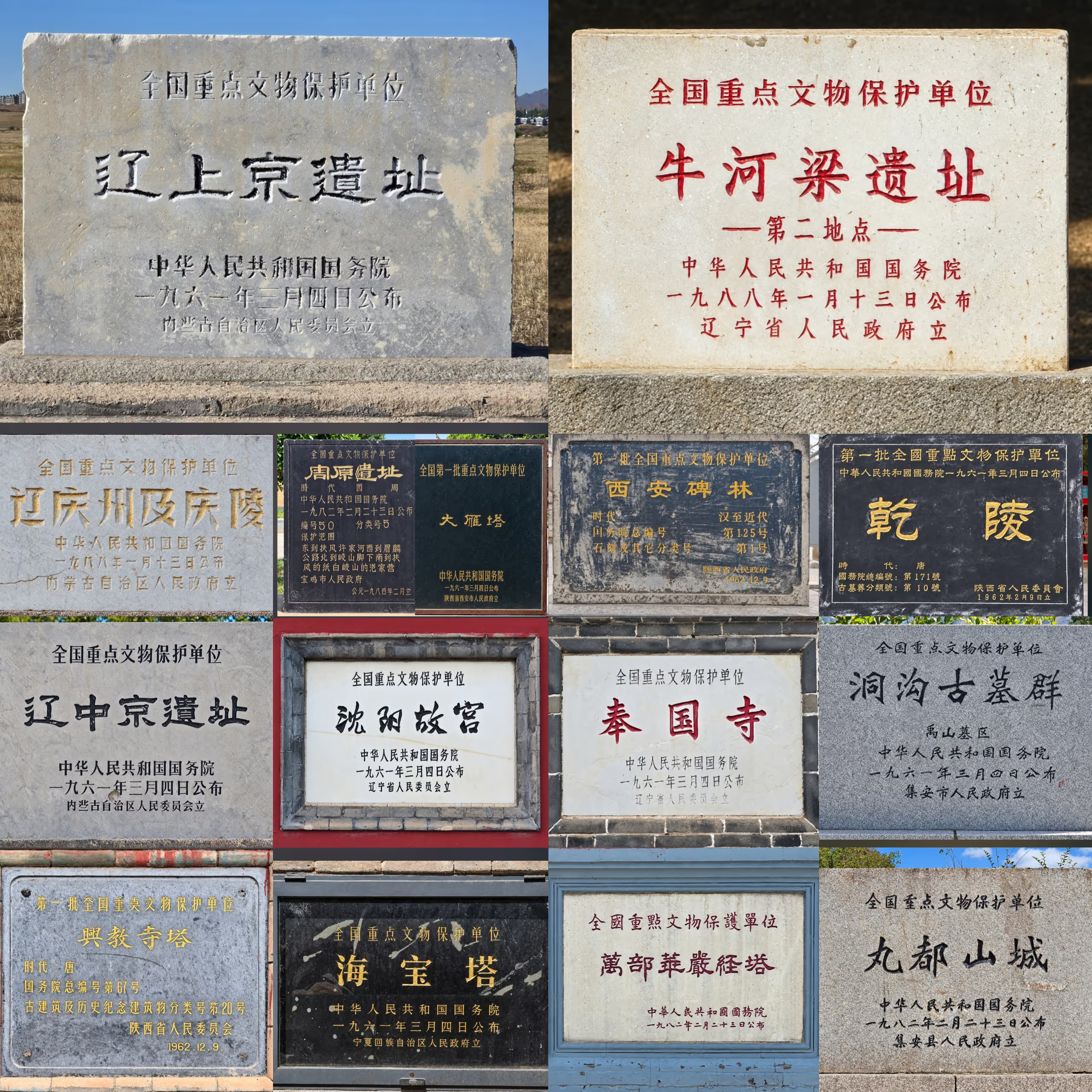
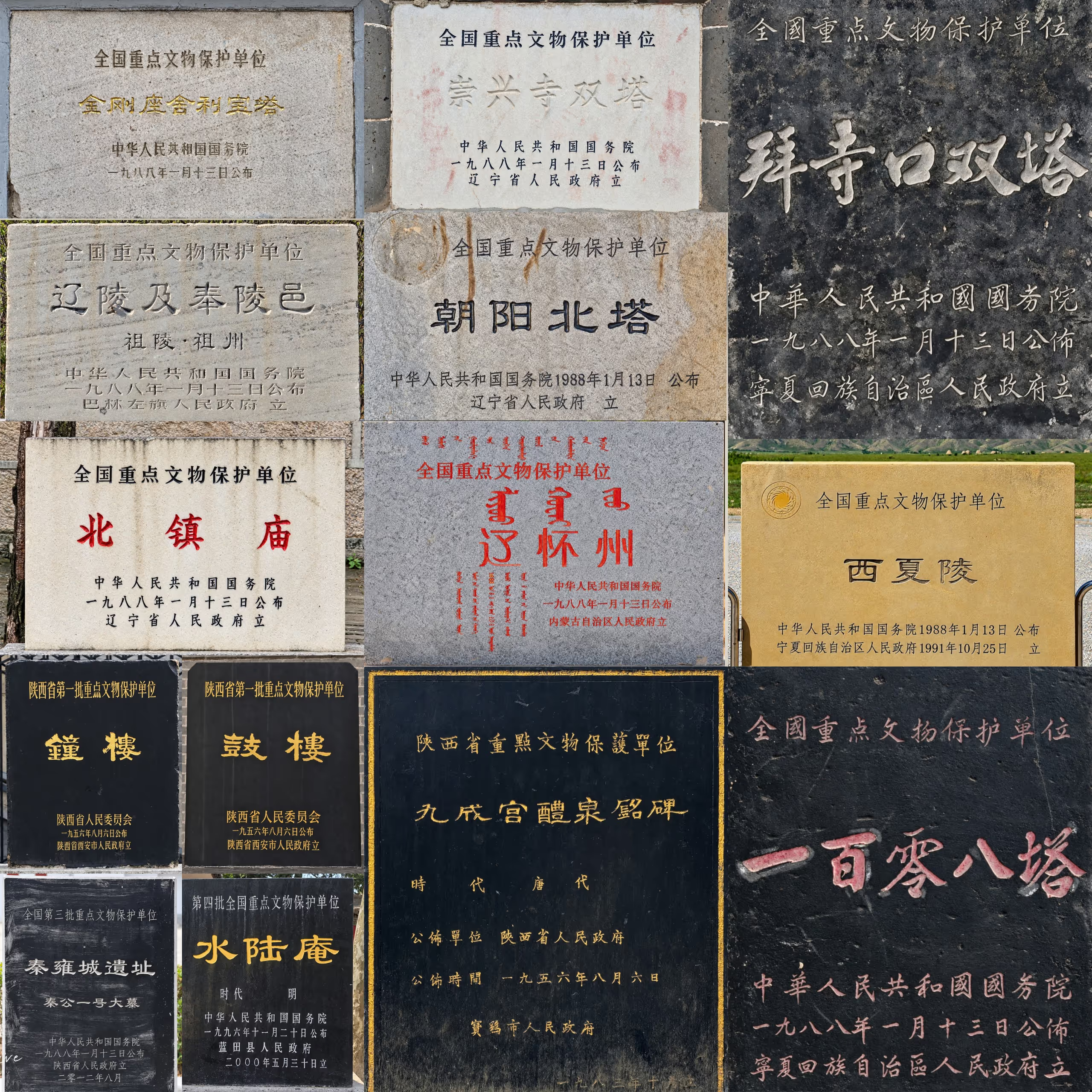
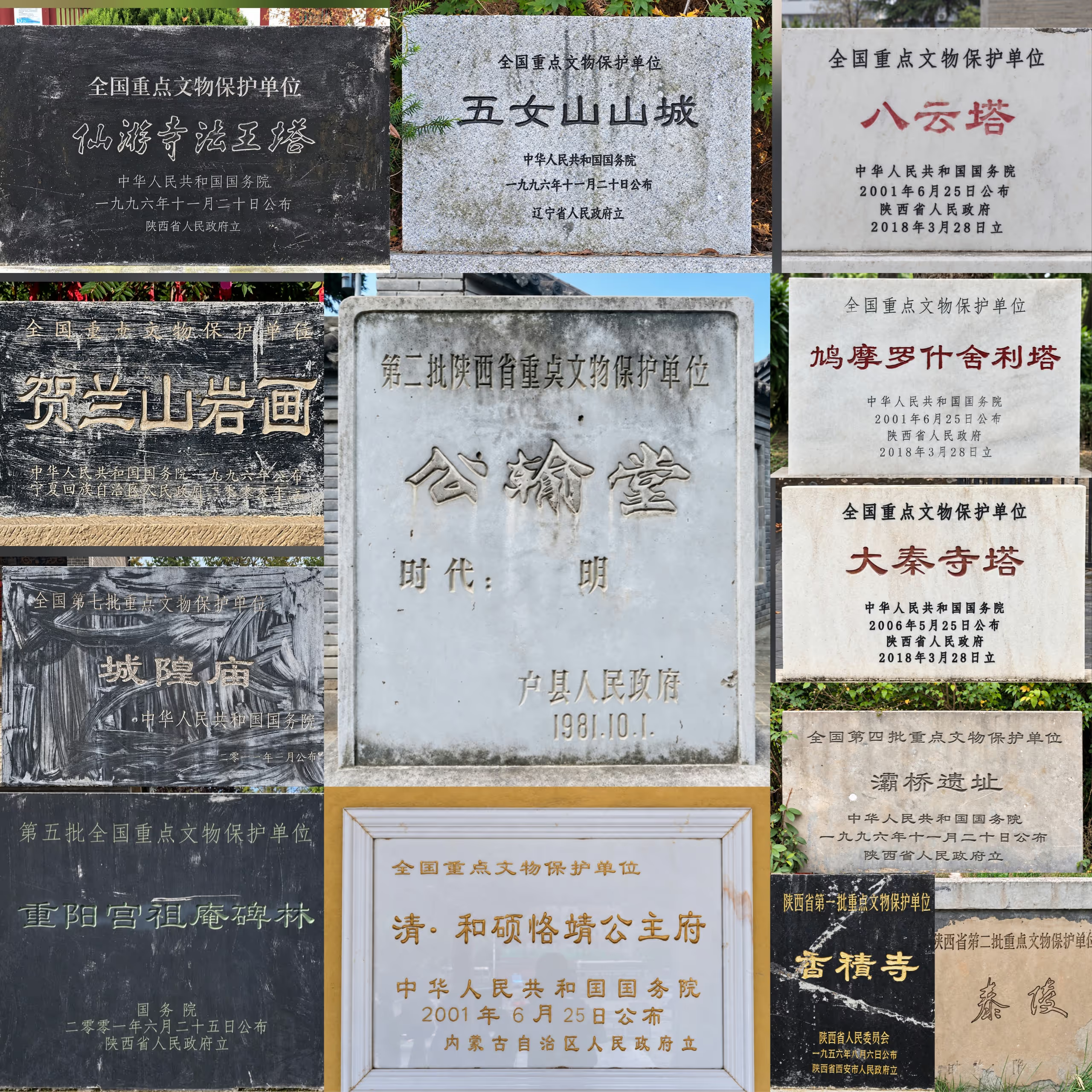
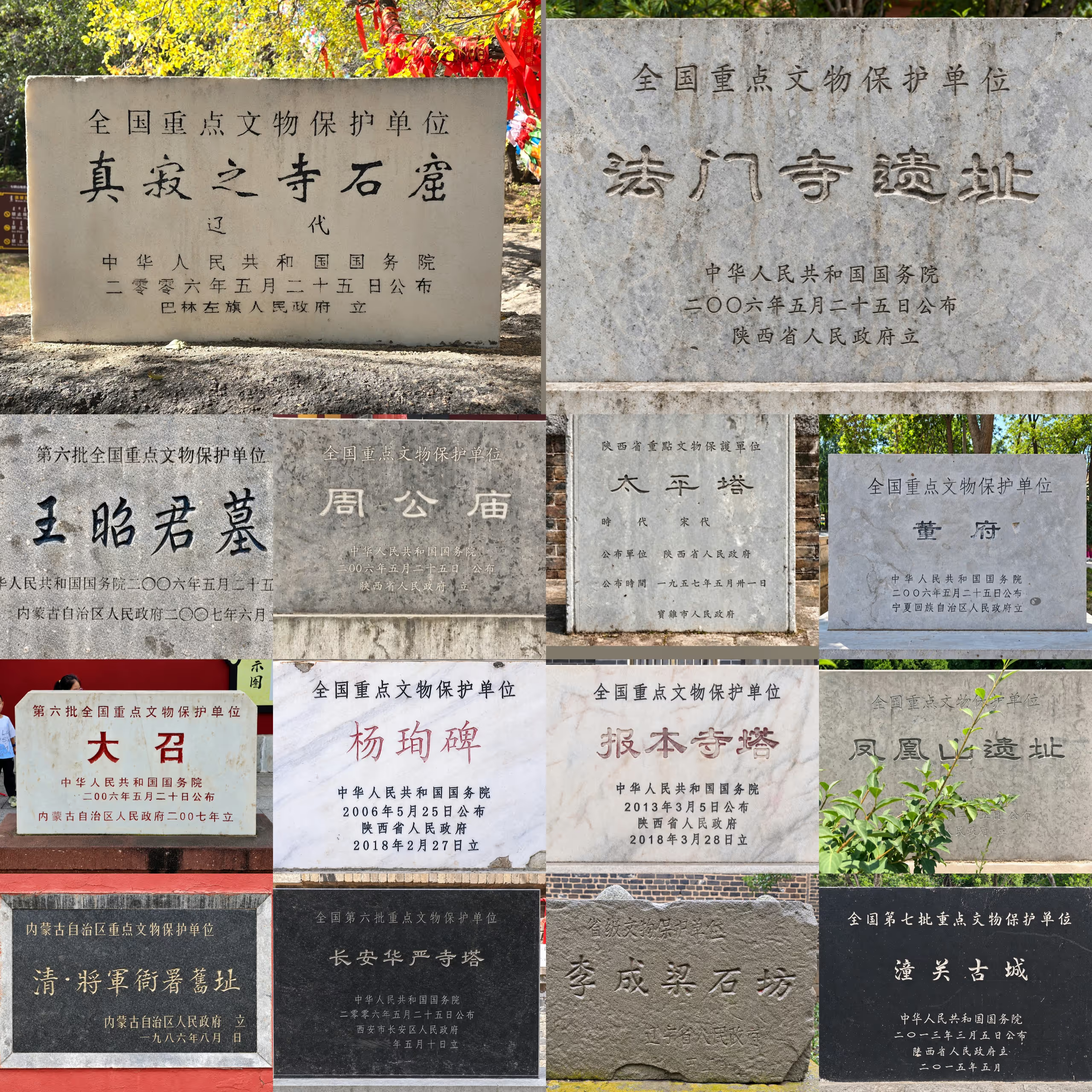
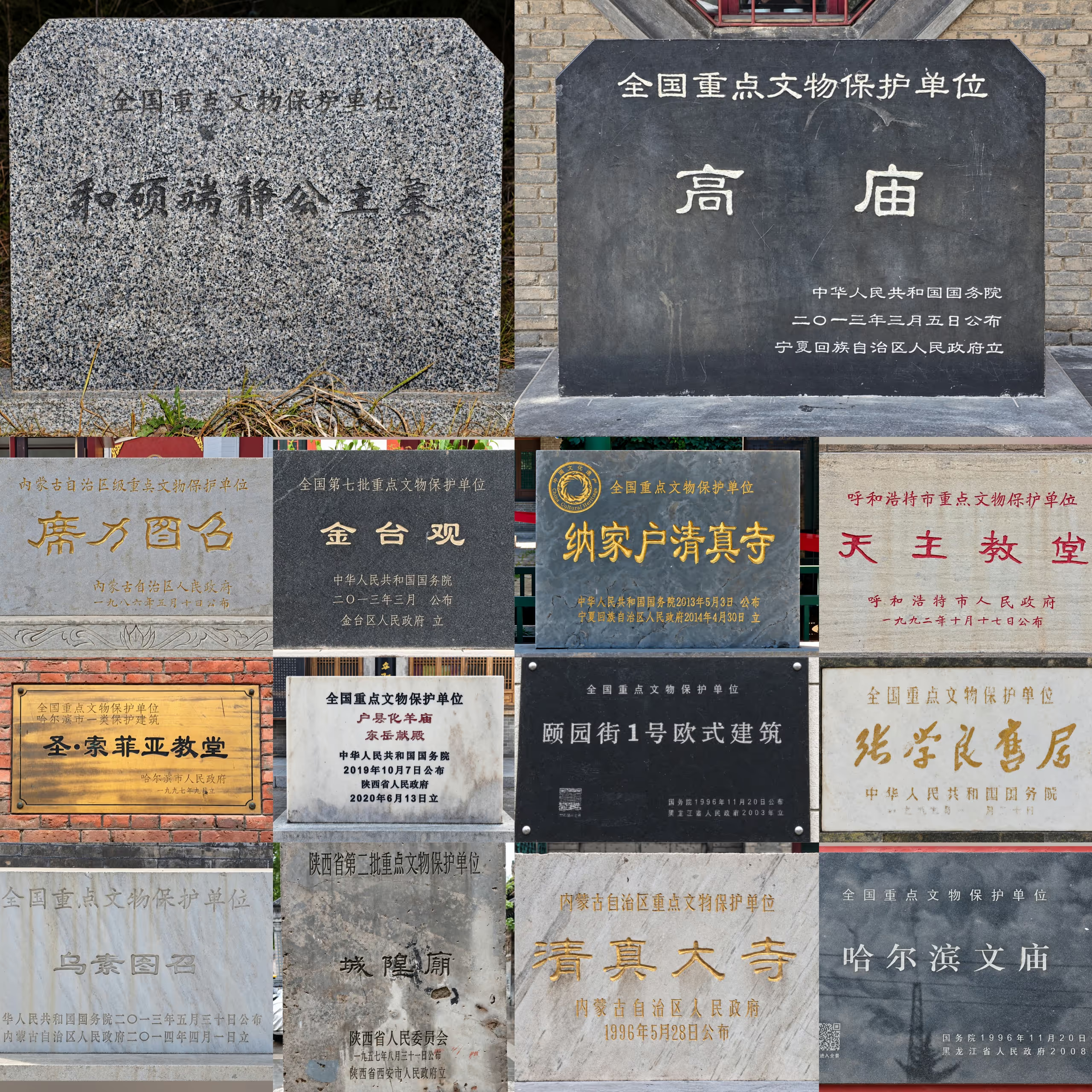
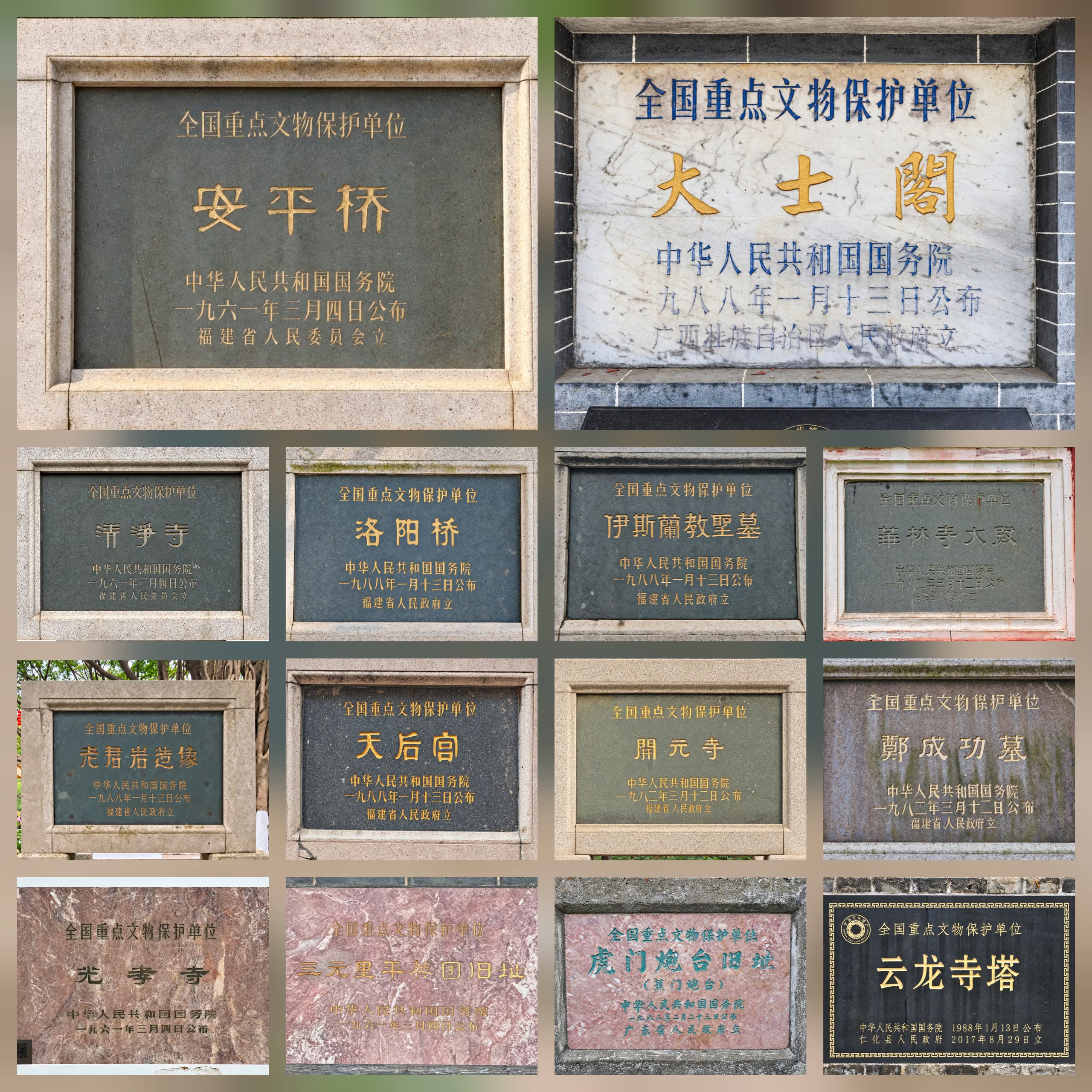
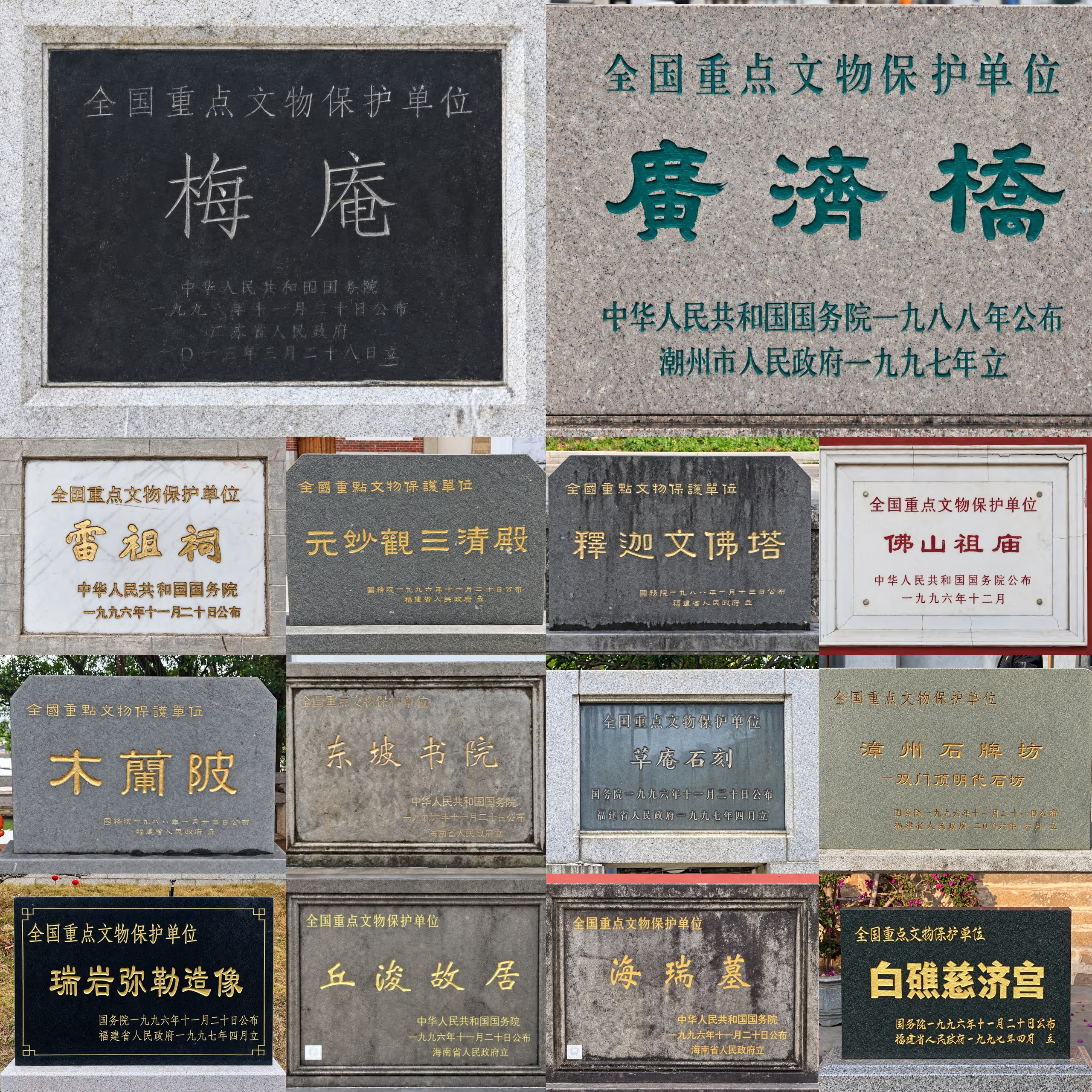
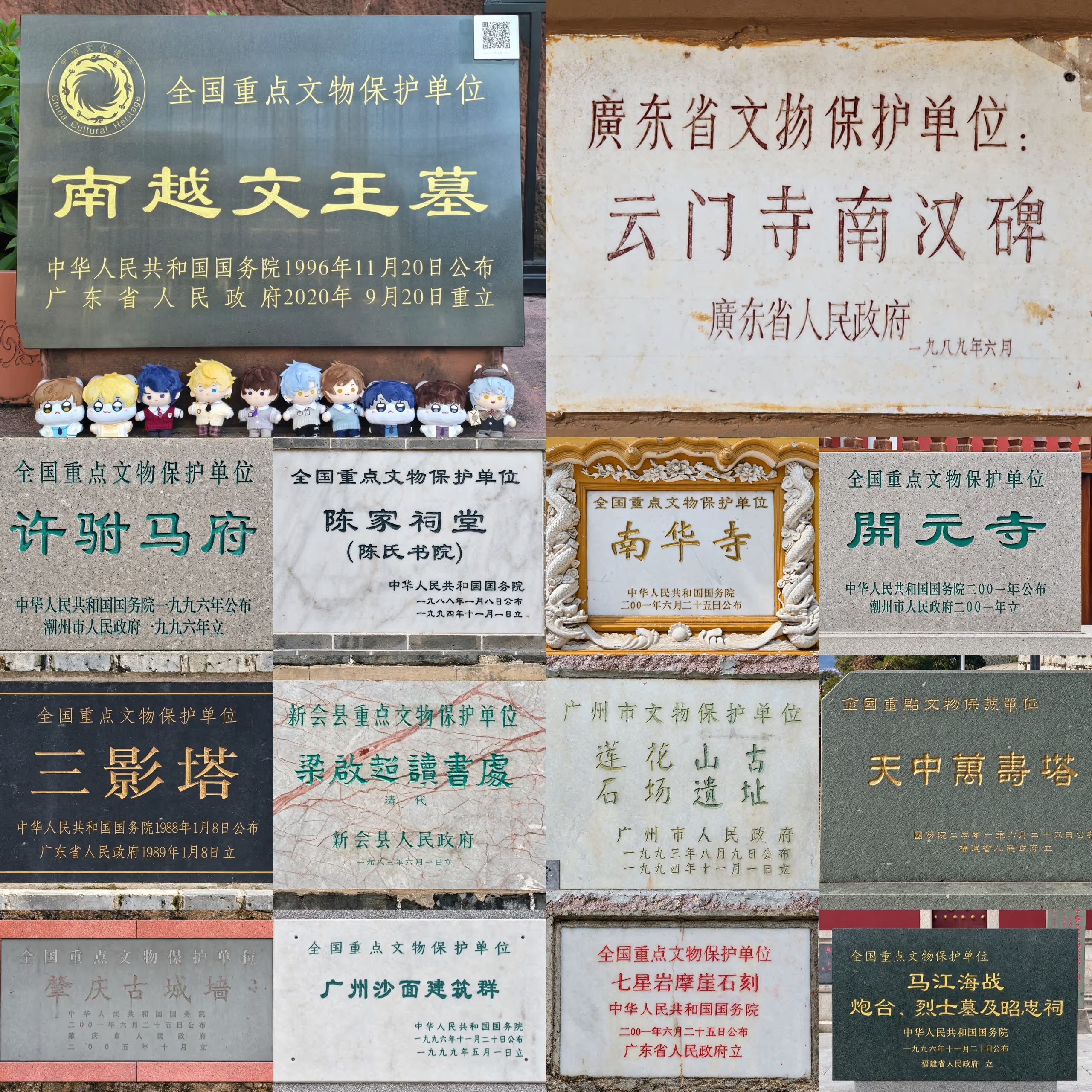
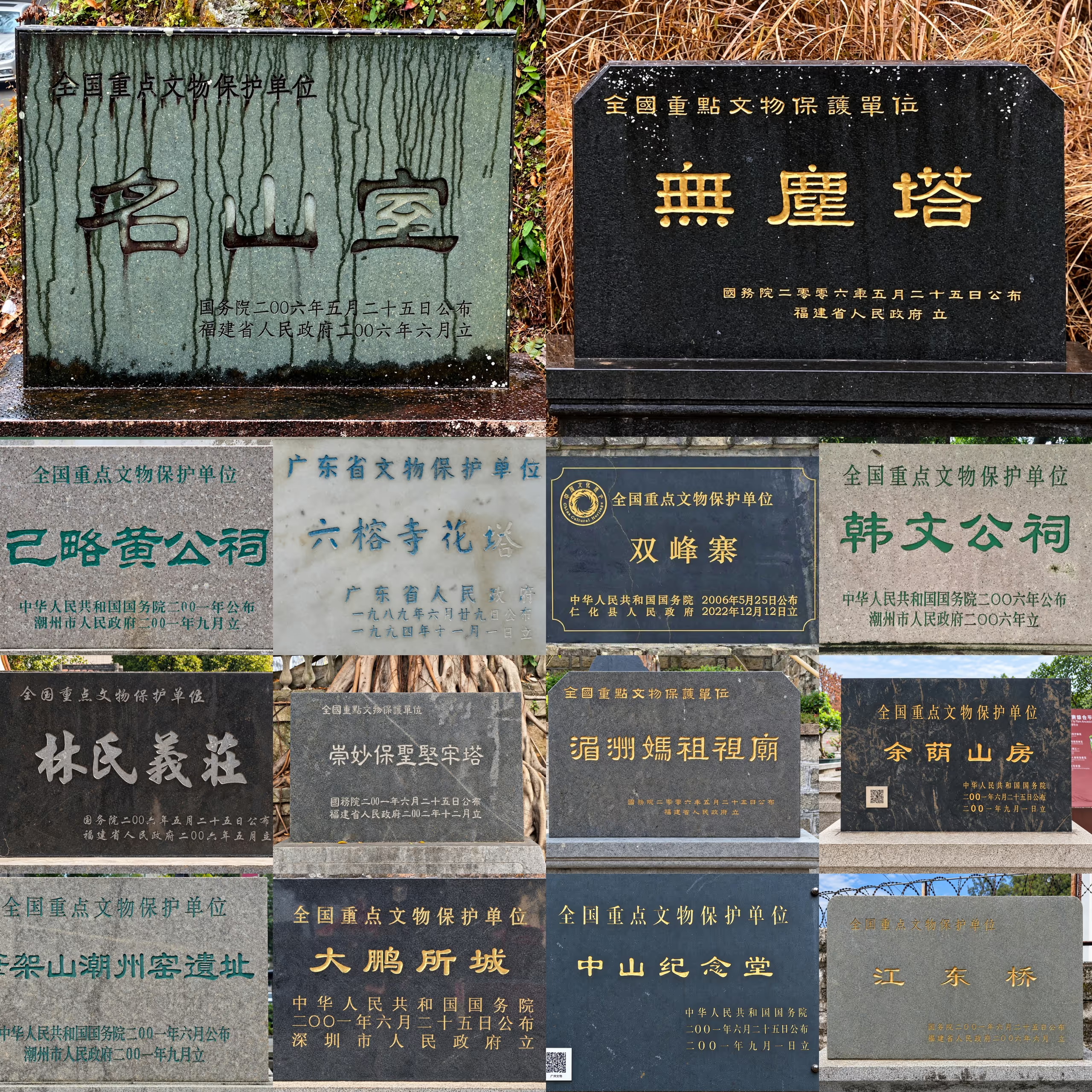
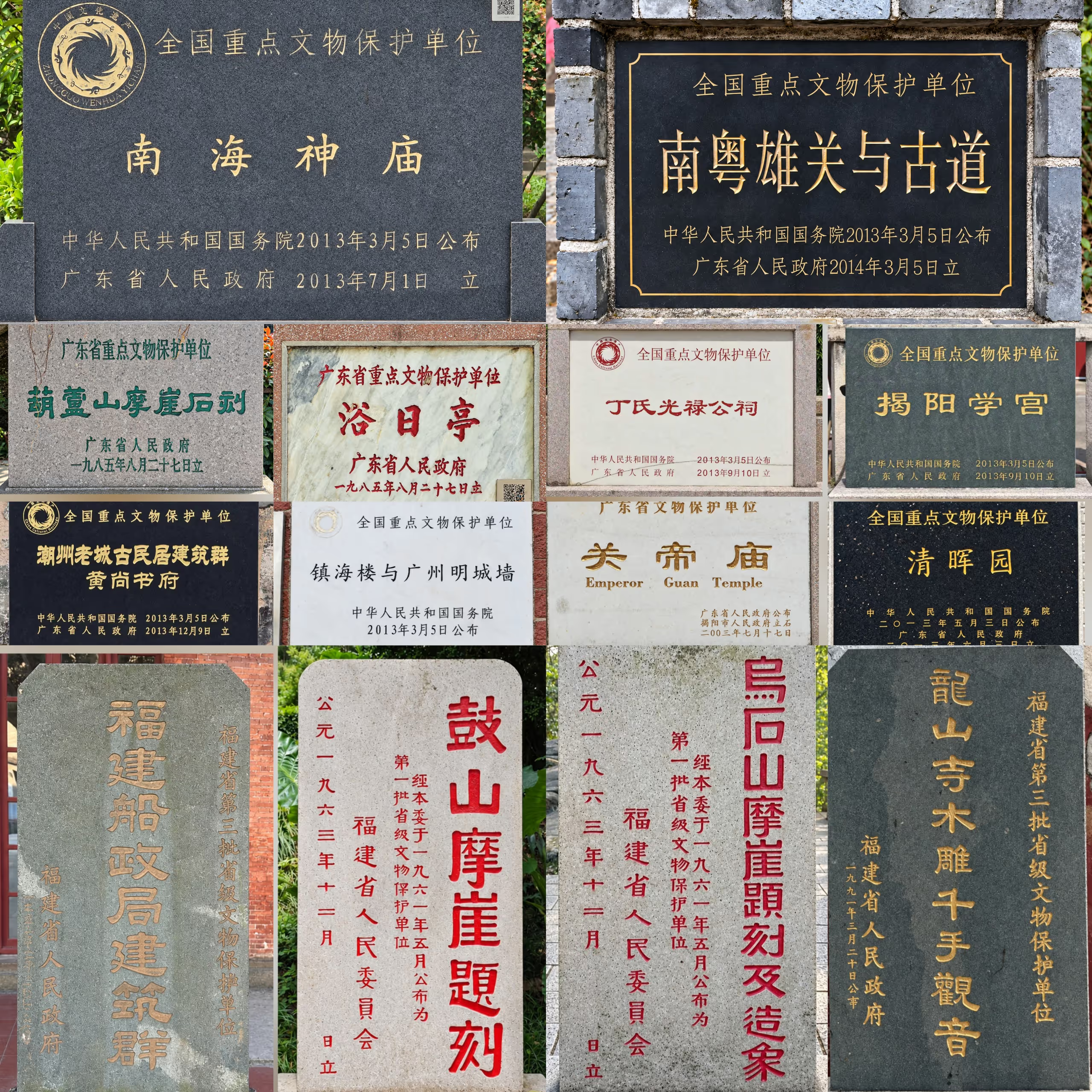
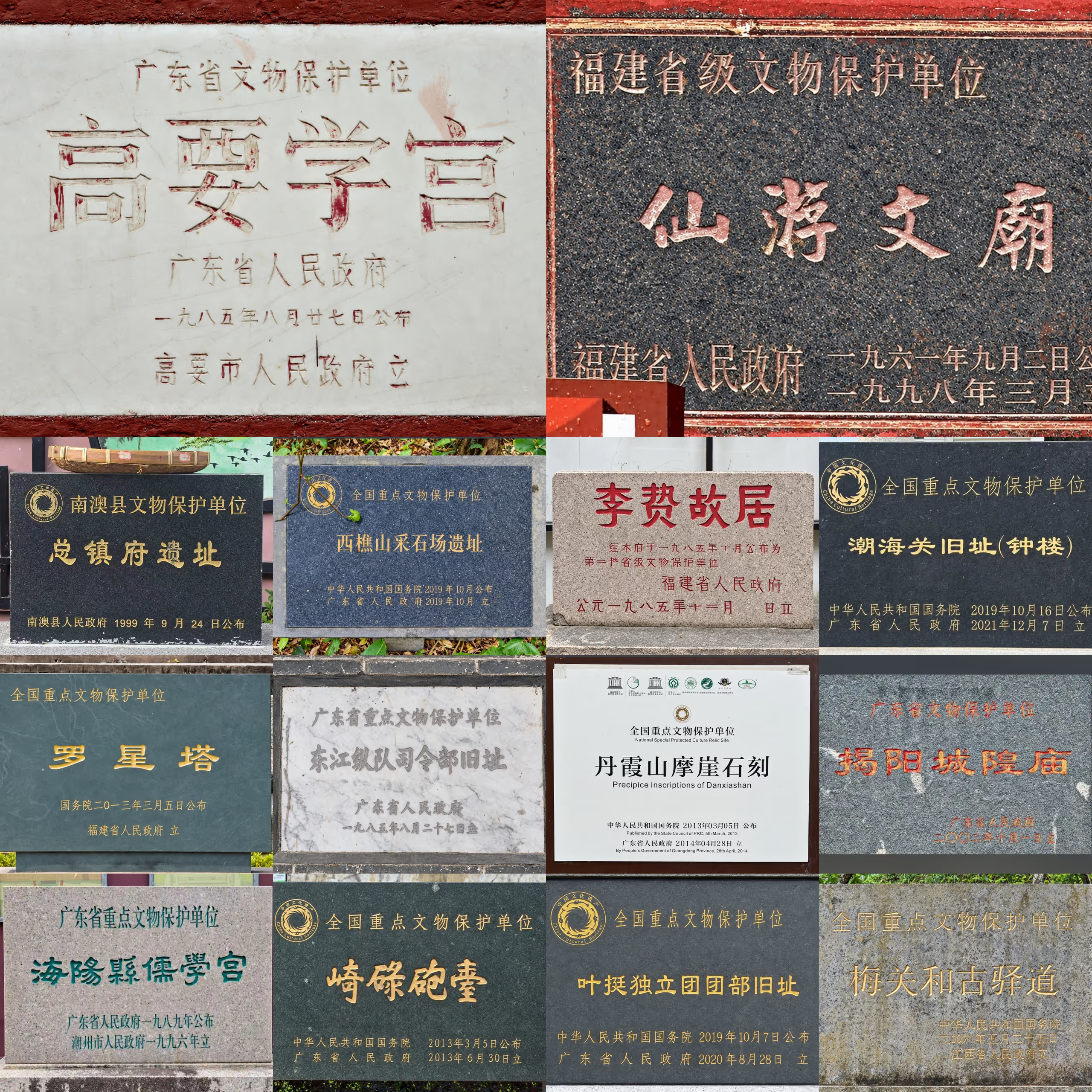
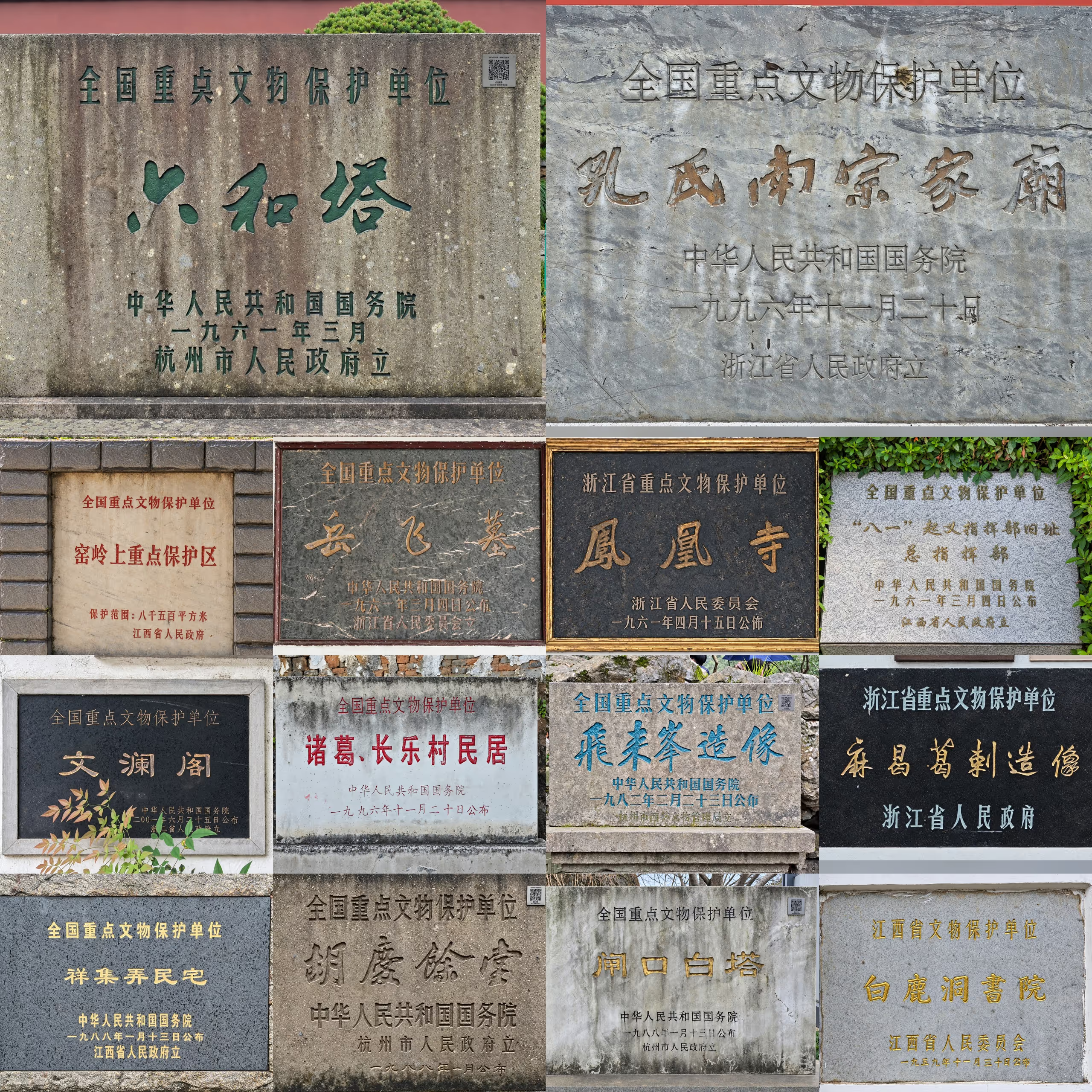
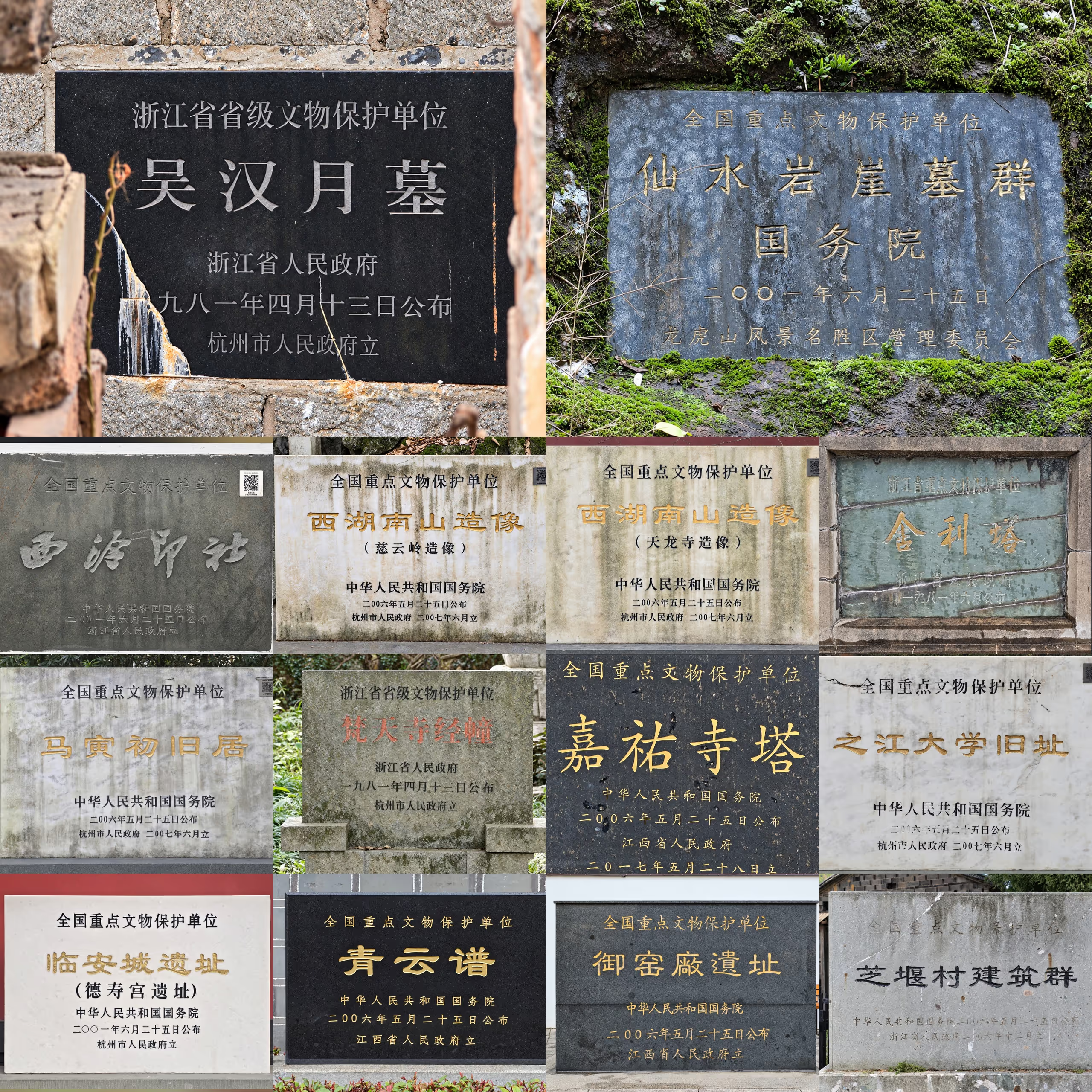
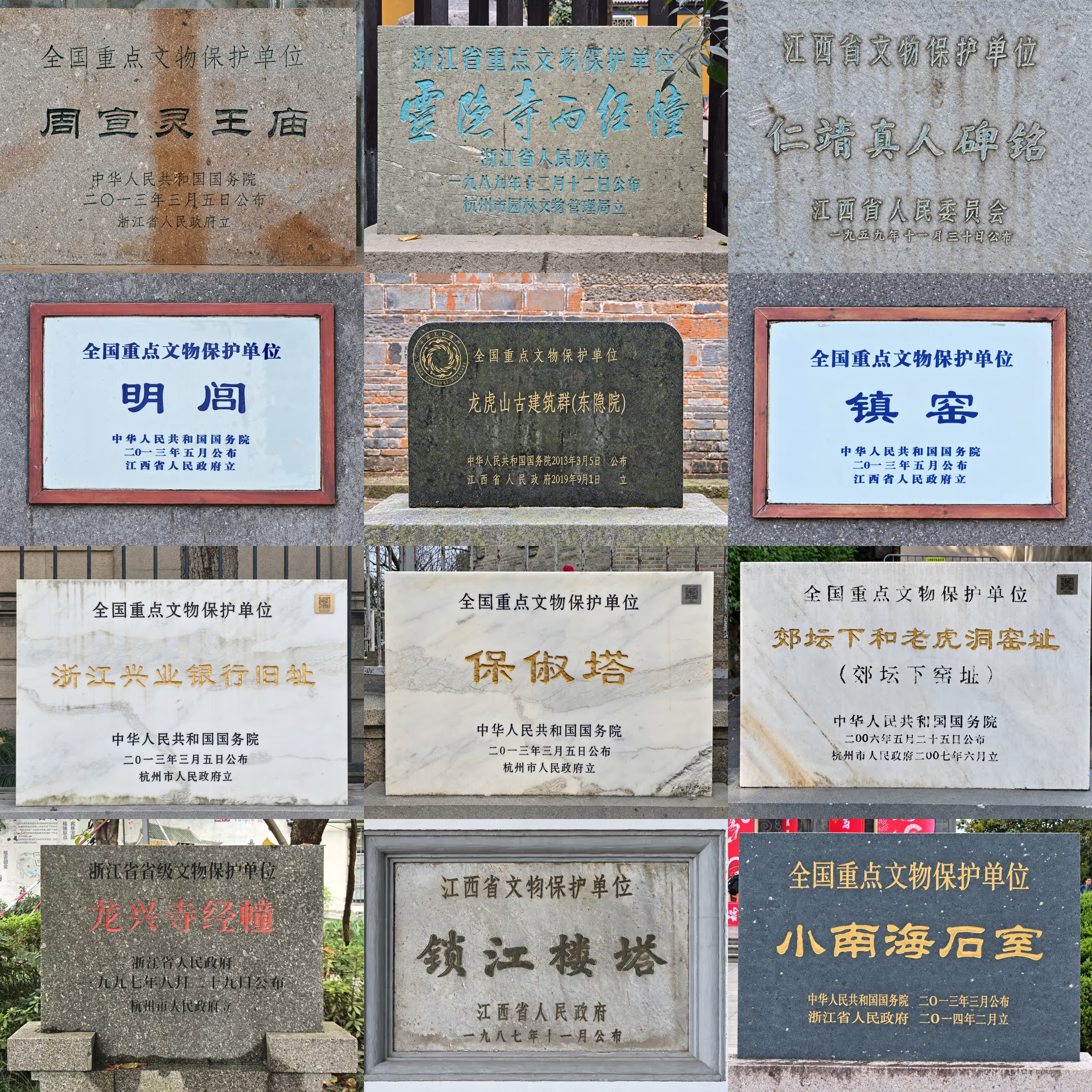
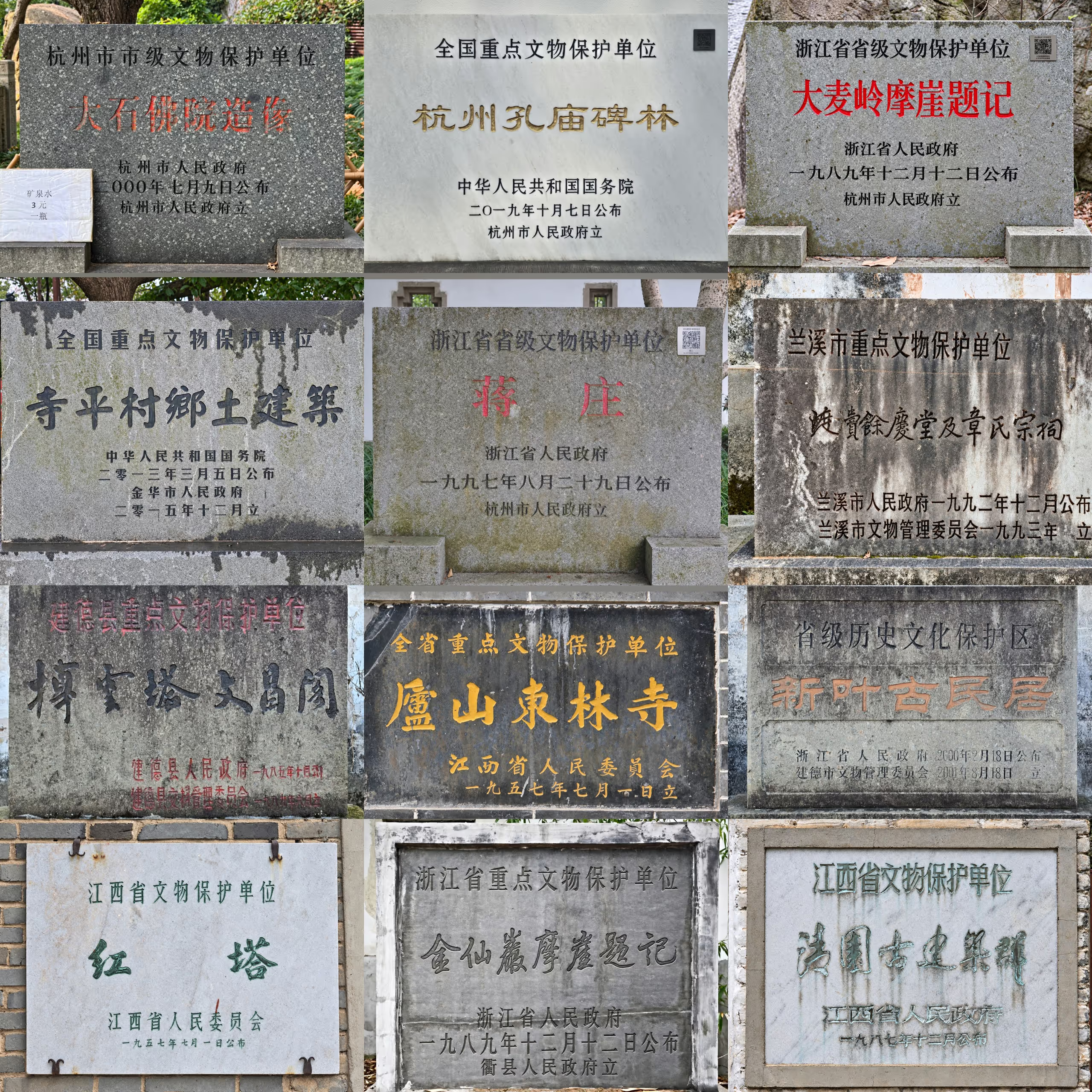
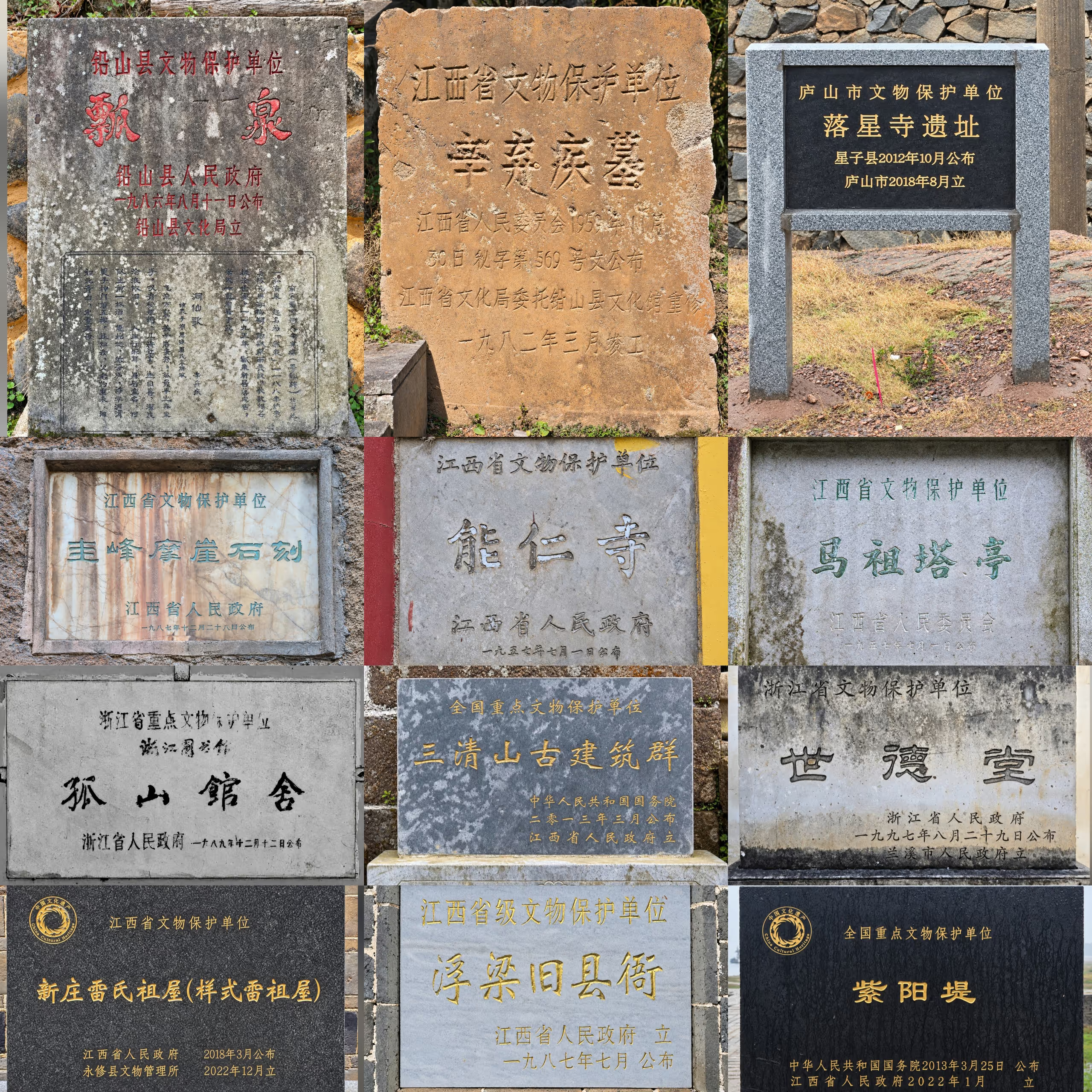
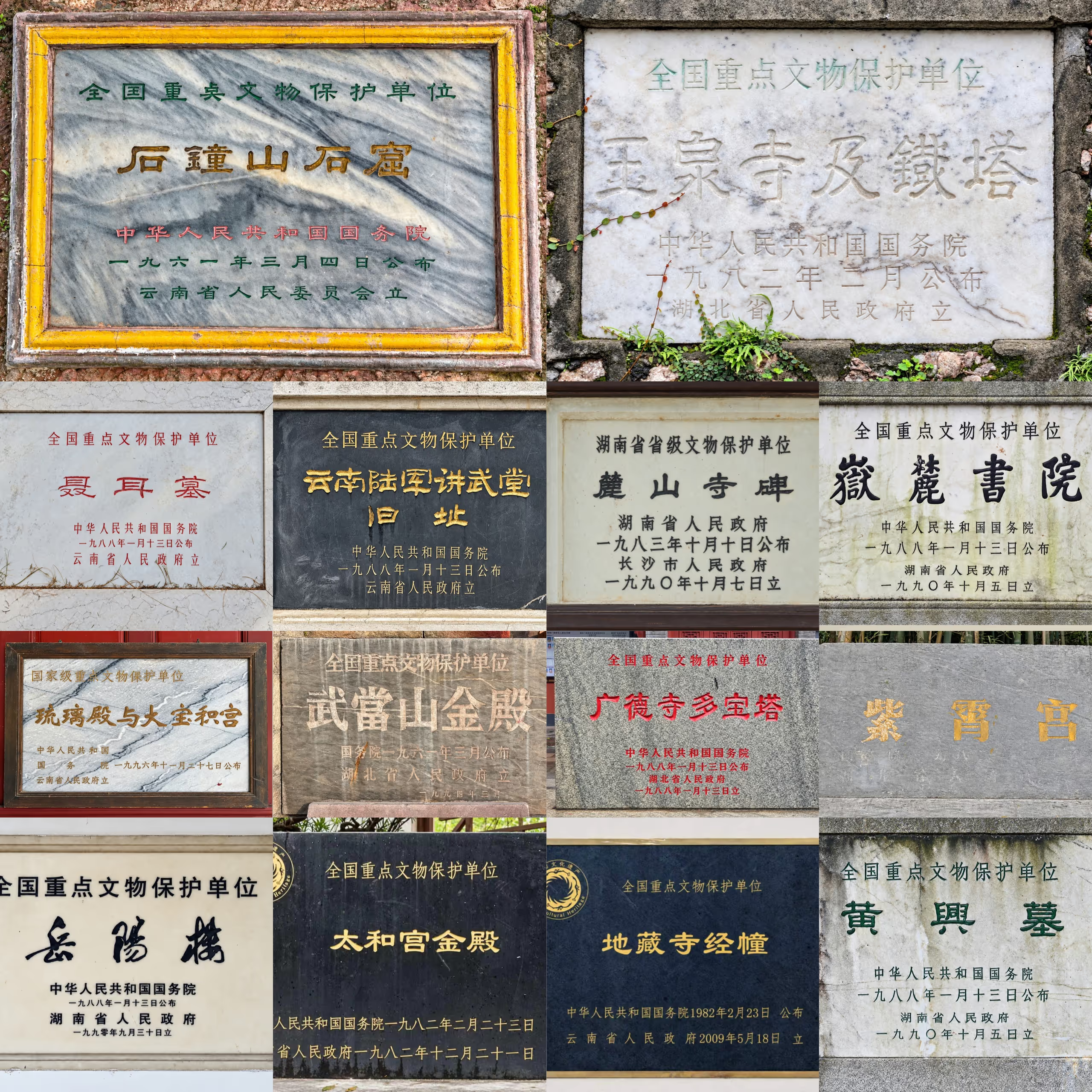
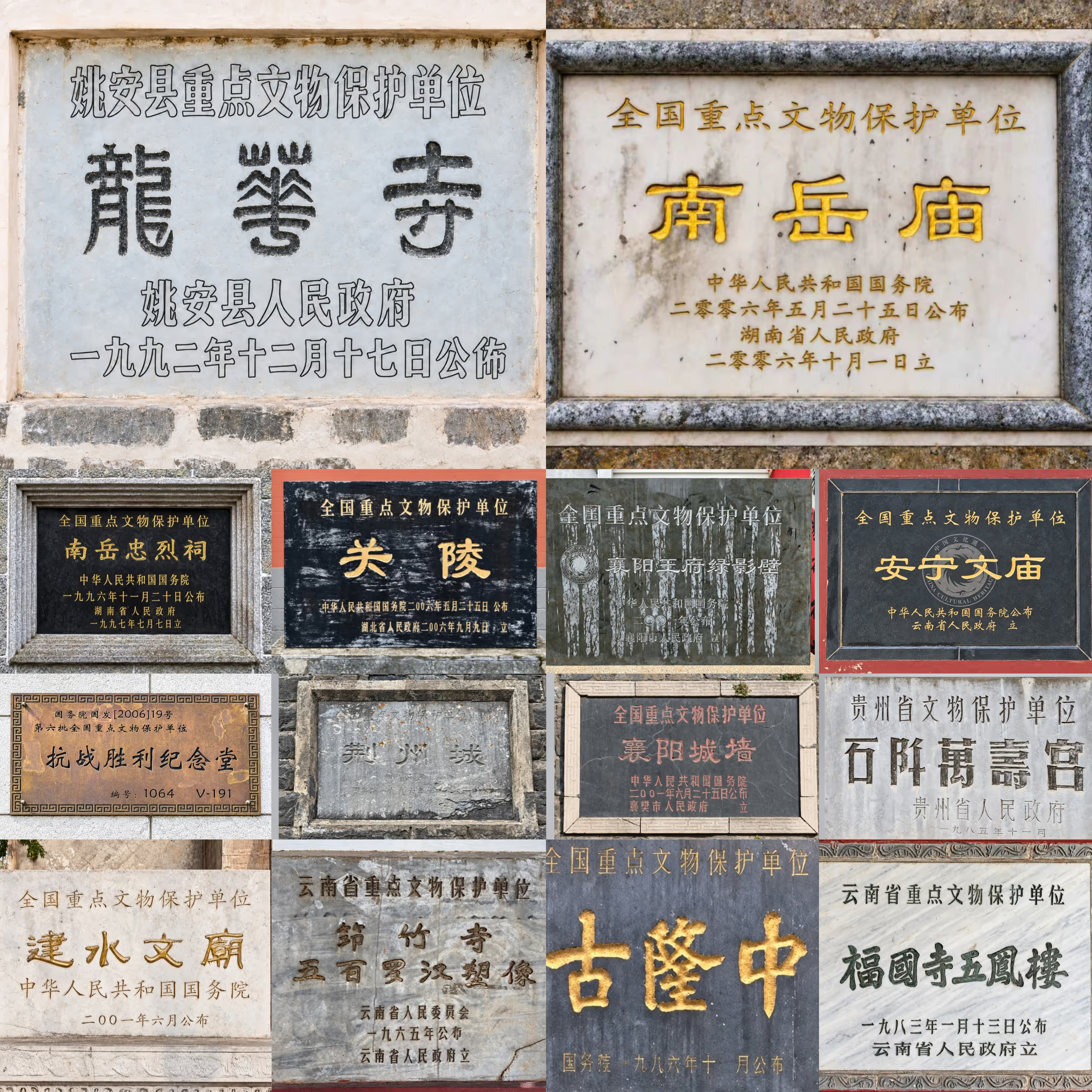
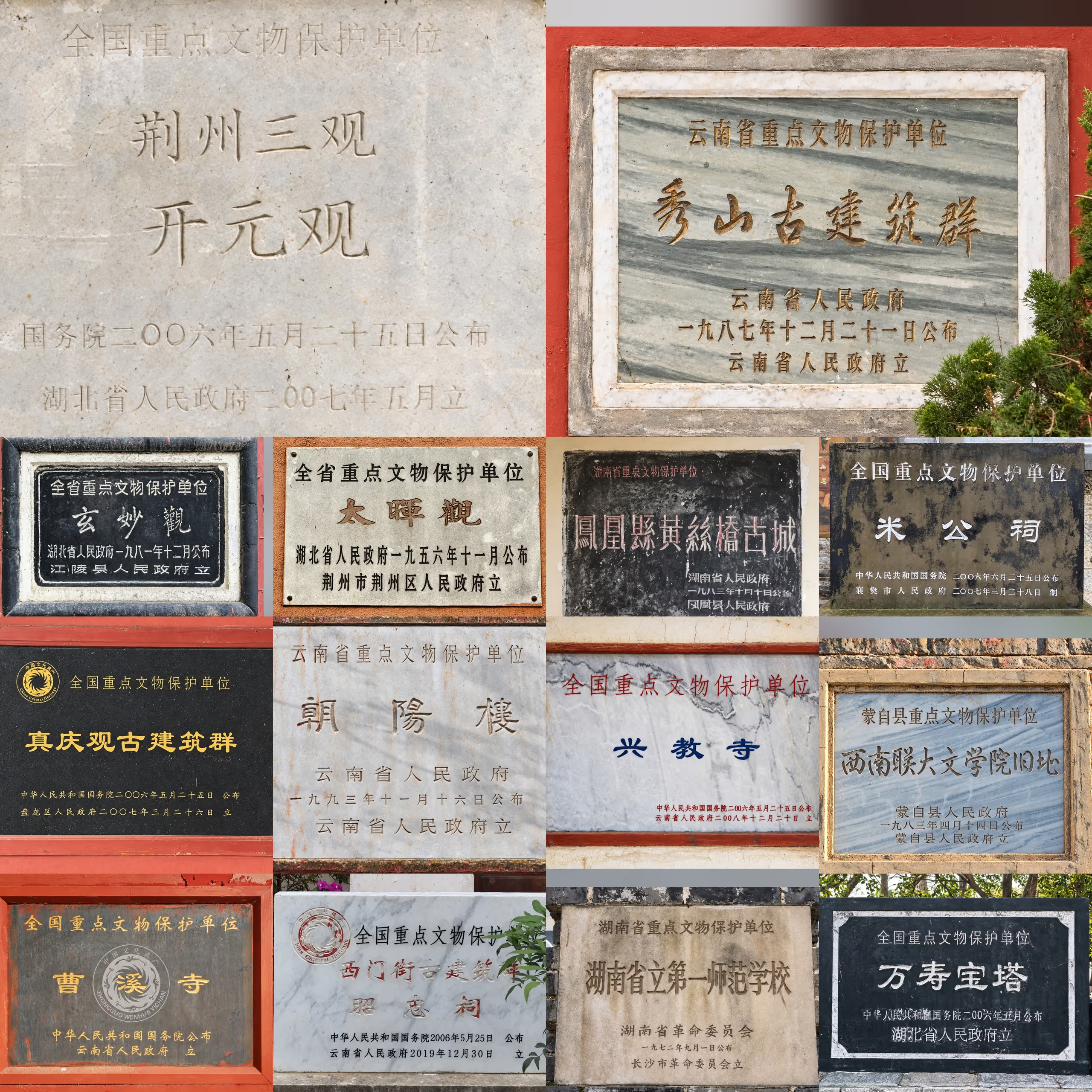
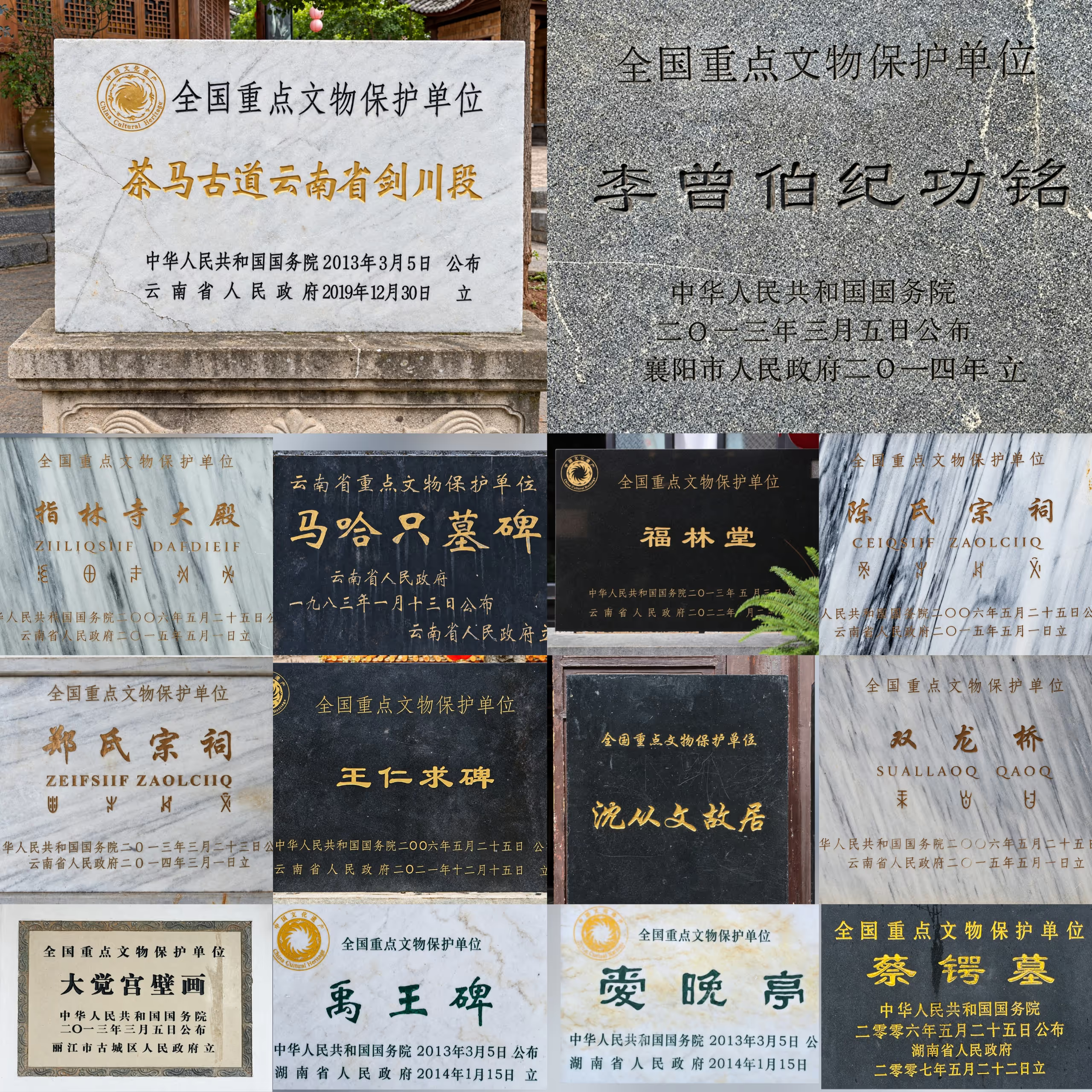
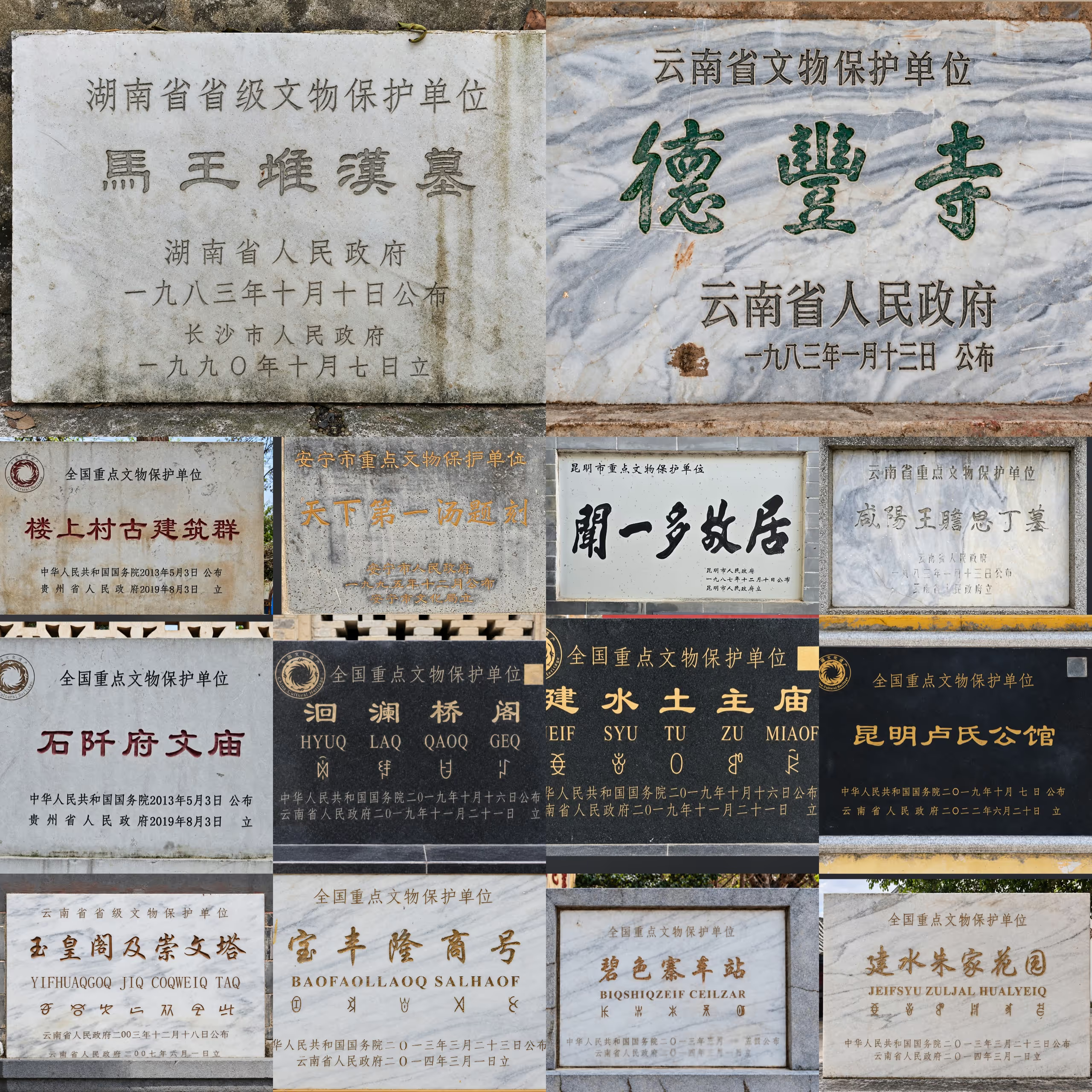
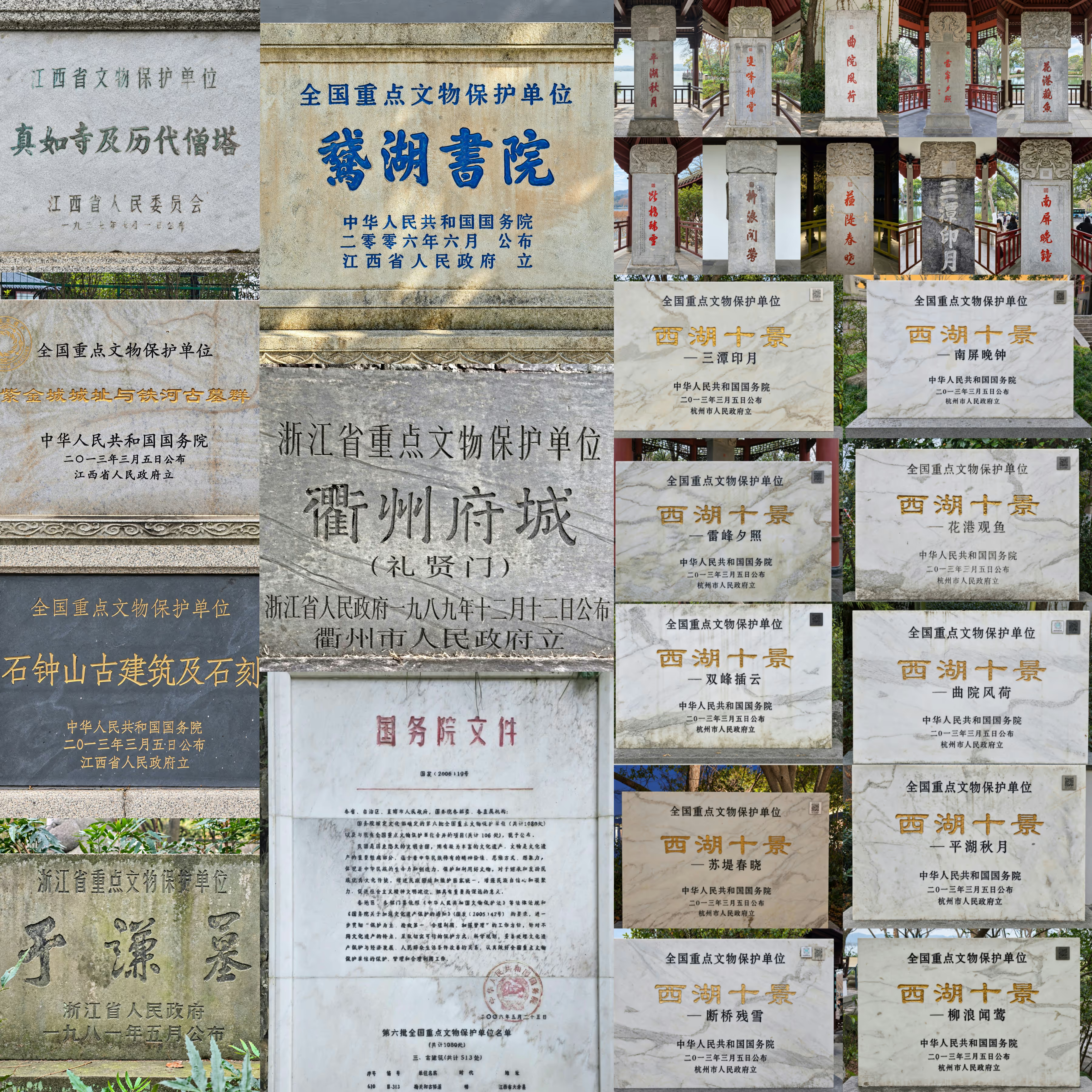
A gathering of heritage markers
A selection of 600 heritage markers collected over recent years.
43 collages · Open an image to explore the inscriptions